All Posts (2056)

Sort by

Include hashtag #dancetechtv in your tweets!

 
Watch live streaming video from dancetechtv at livestream.com

Part of the series Choreography or ELSE


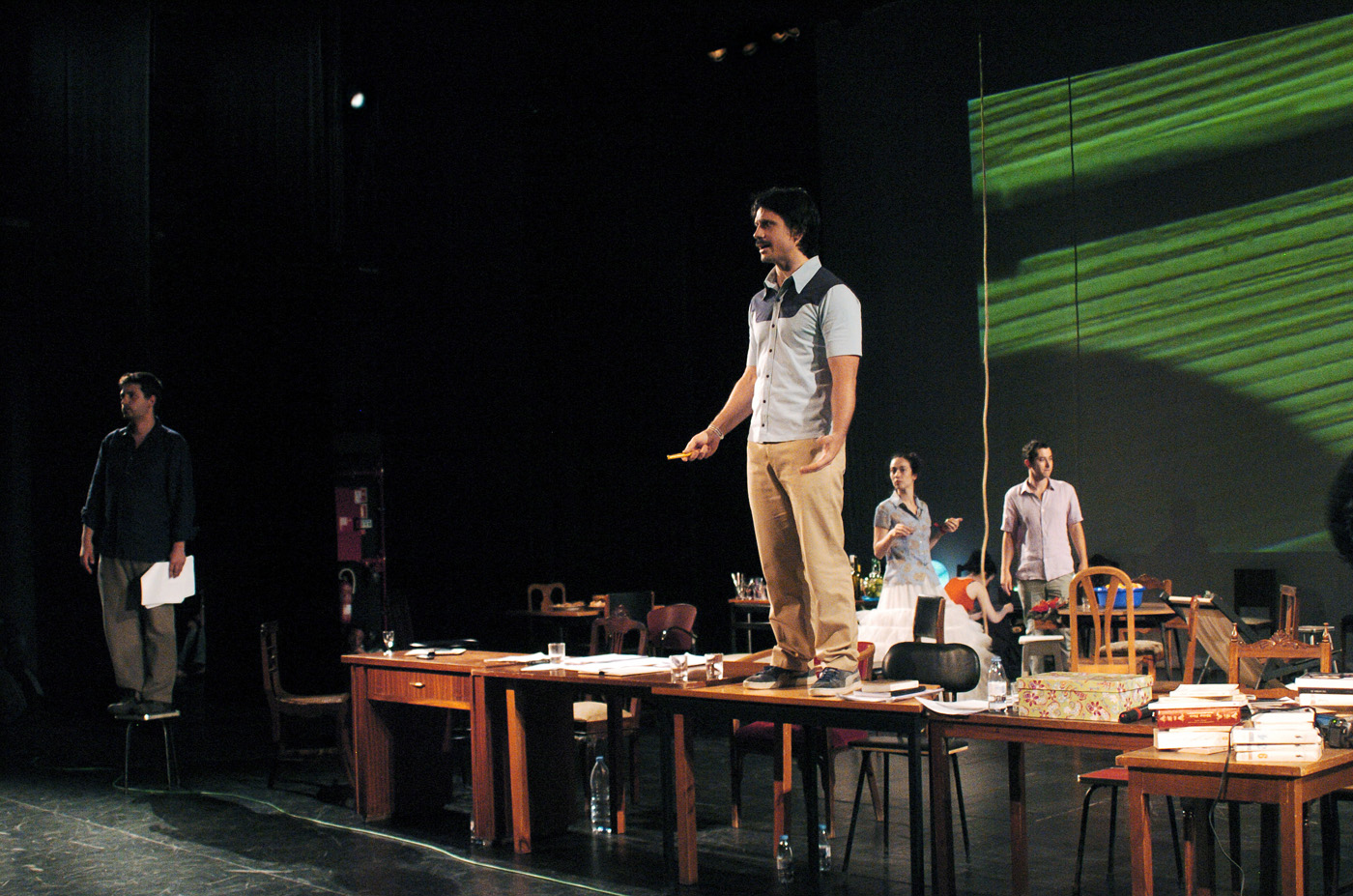
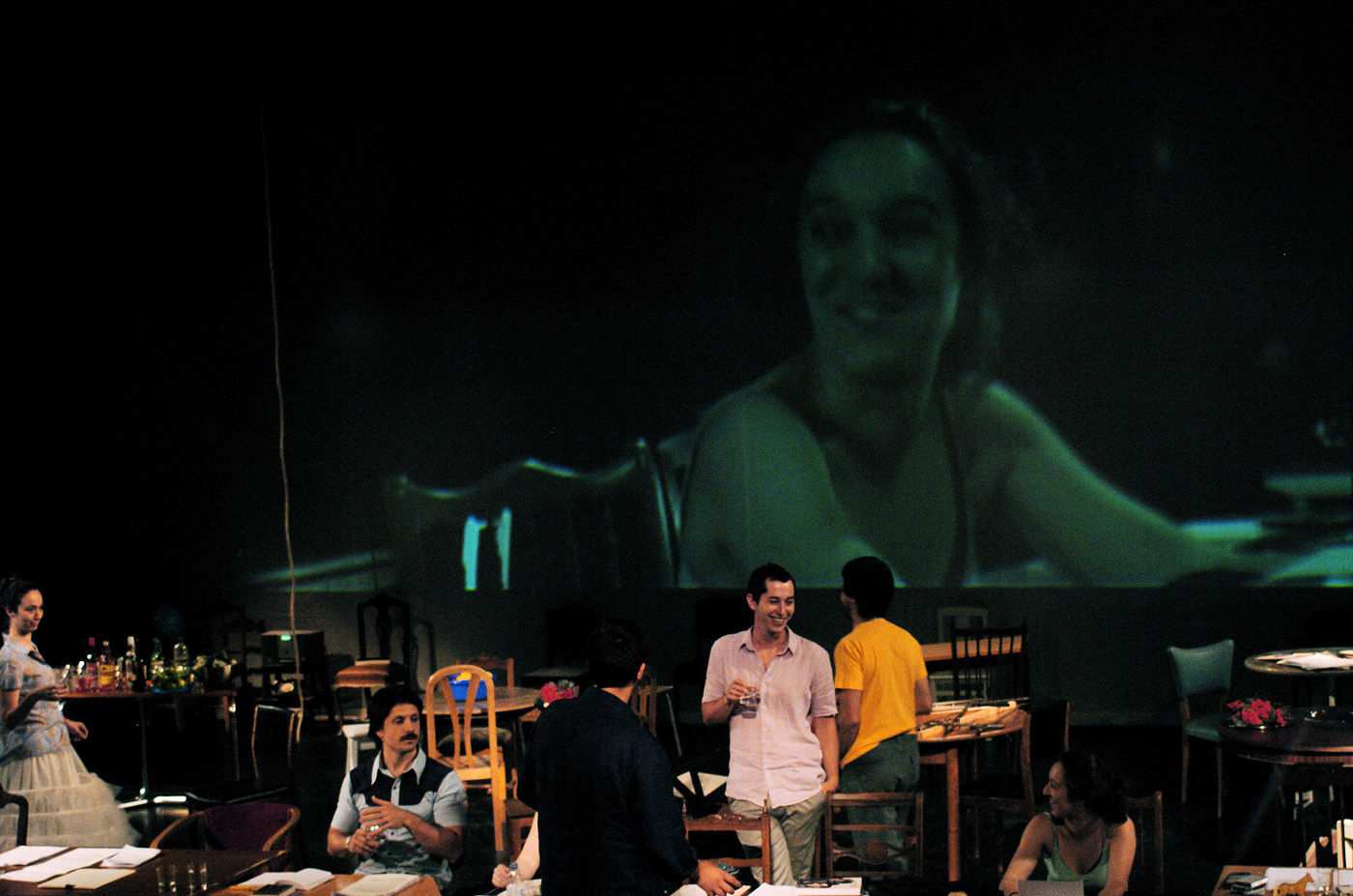
“My Private Bio-politics” performance by Saša Asentić was from the beginning conceived as an open research within the field of dance and performance in Eastern-European transitional context. It arose as a part of a perennial research and artistic project called „Indigo Dance“ in which a number of associates of different profiles were included – performer and culture worker Saša Asentić, ballerina, dancer, and choreographer Olivera Kovačević – Crnjanski, performing arts and culture theoretician and dramaturge Ana Vujanović, as well as others – and is realized through different work formats: in addition to the performance, there are also a CD presentation “Bal-Can-Can Susie Dance” and historical archive/video installation “Tiger’s Leap into the Past” and “Recycle Bin” as its addition.

Author and performer: Saša Asentić
Assistance: Olivera Kovačević-Crnjanski
Theoretical support and dramaturgy: Ana Vujanović

Duration: 55 minutes

Premiere date: 11th February 2007

Place of premiere: Serbian National Theatre – Novi Sad, Serbia

Supported by: Performance is made in co-production with Centre national de la danse – Paris, research in residency (Theorem Dance residencies), and is prepared within interdisciplinary dramaturgical trainings of THe FaMa in Belgrade and Dubrovnik. Performance is supported by DanceWEB (with the support of the Cultural Programme 2000 of the European Union within the frame of danceWEB Europe).

Concept:
This work tries to deal with its own macro and micro conditions in which it appears.

For the beginning, to make them visible because of specification of mechanisms and procedures of the production of dance on Serbian scene. Then, to intervene. However, this led to a series of questions which were left without final answers. Finally, these questions, in their complexity, became the main intervention which this work is going to try to carry out. 

The questions spring from the problem of positioning within relations of global and local bio-powers and bio-politics of dance in Serbia today. How to locate “one’s own (private and public) specificity”? And what is to be done with it bearing in mind the tensions between local ideologies and global expectations related to these ideologies: evacuate it from the work in order to achieve successful communication (or coquetting) with the global, that is, Western, trends, in which this specificity is not included; or to base the work on it even at the cost of failure, i.e. exclusion from conceptual-programmatic map of the international scene? Furthermore, does the former strategy gives us “a right to discourse” or is this decided at a completely different place and by means of completely different procedures?

Which ”bodies” are imprinted in the body that is dancing today on the Serbian scene? For example, which bodies (coming from this specific context) are projected, through expectations of a hypothetical “Western curator, and by this a spectator as well, almost as a genetically determined feature/difference from the “Western one”?
Where the particularity of that context is, in its contemporaneity, very gloomy – that context is not a part of the First World, it is not EU, it is still called the East (even though the West is not called “West” any more), it is post-socialist in the capitalist world, and it is terribly transitional, without a single bit of “flexibility and nomadism” which would make it exotic.
Which are, on the local dance scene, the bodies that hover dancing in the air here, over an “indigo paper” (carbon copy), without being “grounded” in such a context, and which are moved by a wish to be contemporary, maybe even resistant? And then again, which are the other bodies that would carry the local specificity, for which, in fact, neither we ourselves want to know? Nevertheless, if we construct and show them, although we would rather not… which bio-politics are we executing? Isn’t it not already a contribution to some other bio-power? Local? Or…? Where, in this (inter)space are this work and the politics of the body that will perform it in a public space, which we share and in which we continue to live?

READ MORE ABOUT THE PROJECT


Bio


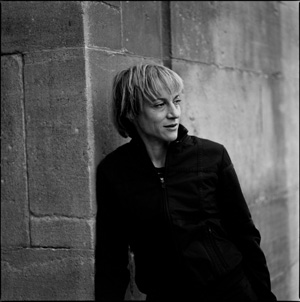
Saša Asentić has interest in re-thinking and experiencing (performer’s) state of “I am…” through differentiation and understanding of actual reality (current situation in transitional society and performing arts scene) through artistic / social / political (re)actions.
He has experience as author, co-author and performer in different performative forms in diverse contexts (since 1998).
Individually or together with his colleagues, he has initiated several international and collaborative performing arts projects: workshops, seminars, festivals, etc (since 2000).
His work was presented in different festivals and art centers in USA, France, Germany, Austria, Spain, Portugal, Finland, Greece, Ireland, Poland, Lithania, Romania, Croatia, Slovenia, Bosnia and Herzegovina, Serbia, Macedonia, etc. (since 2000).
Asentić has autodidactic informal education in the field of performing arts (since 1995), he is initiator of the artistic organization Per.Art (2005) and author and leader of program „Art and Inclusion“ for mentally disabled people (since 1999).
He took part in ex.e.r.ce 2008 program in Centre choregraphique national Montpellier and in 6m1L extenssion project in 2009 in PAF (France) and IN-presentable festival (Spain).
He collaborates with Ana Vujanović, Xavier Le Roy, Eszter Salamon, Bojana Cvejić, Olivera Kovačević Crnjanski and others.
Asentić studied Agriculture and Pedagogy at University in Novi Sad, Serbia.

Page on dance-tech.net

dance-tech.net interview with Sasa Asentic and Ana Vujanovic at Dance Theater Workshop in New York City. March 9th 2009


Find more videos like this on dance-tech.net


PRESS QUOTES:


…A Bosnian who lives in Serbia, Asentić decided on lecture-performance format not because he, as he noticed self-ironically, “wouldn’t be able to produce a dance piece,” but first of all, to raise the issues dealing the way of functioning and codes of dance concern. In “My Private Biopolitics” the performer is toying with quotes of Western-European role-models like Jérôme Bel and Xavier Le Roy, and opposes clichés of “exotic,” “awkward” and “old-fashioned”, with which an Eastern-European artist has to fight against, if they wish to endure on an international market.
tanznetz.de (Berlin, Germany)
Reviews –Shows – Burning questions
Tanz im August Festival 2007


…Productions like Sasa Asentic΄'s which do not hold the terrified and terrifying mask of contemporaneity up to their audiences' face, fare better. Sasa Asentic΄ plays around with the trauma in a humorous and funny way, keeping his ironical distance to the mask without denying both the artistic and economic necessity to deal with it.
Balkan Dance Platform 2007 Journal (Athens, Greece)
The Fear of Representation, or Reifying the Weosft eCronn Itmemagpeo raneity
Gerald Siegmun

...In this critical look at the Serbian dance scene, Mr. Asentic also explores larger issues in the world of contemporary dance. His observations, through text and movement, delve into questions of marketability and what constitutes authentic Eastern European dance...

...There are many levels to “My private bio-politics” — a good thing — yet its message is simple: Always break the rules.

The New York Times (New York, USA)


...Serbian artist Sasa Asentic directly addresses the question of the creative distribution system, deconstructing the absurd processes, expectations, and outcomes it produces. He uses linguistic tricks borrowed from theorists, picking apart their practical quandaries, all the while constructing his argument and, by extension, this particular performance...


...Critical and self-reflexive, Asentic exposes and exploits the absurd conditions that exist within our cultural systems, laughing but aware of the consequences that come when those at the margins are brought into the center.

What's particularly enticing about the artist's implicit thesis is that by participating as audience members at his debut US performance - that is, in purchasing his performance product through the distribution modes of the West - we become part of the dialectic in the immediate moment of the performance as it happens.

It's hard to make ontological pluralism or theory of any kind entertaining, but Asentic succeeds spectacularly.

Gay City News (New York, USA)

Modes Of Production

Brian McCormick


…At first site, “My Private Biopolitics” is mainly a text, a conceptual piece, bordering with lecture-performance genre.And then again, as this short council unfolds, it becomes more obvious how Asentić arranged this small piece with quotations and repeated parts, an astonishing shifts of perspective and subtle shifts of context, as well as alternations of closed and complex sequences of movement.

Every sentence, every reminiscence and gesture flows back into discourse on contemporary dance and its conditions in different context. Of course, as a performative practice which Asentić, with such an ease, managed to interweave in a formally completed étude that made it more tangible, and in the same time more convincing, for it lacks any kind of artificial or didactic stance.

Frankfurter Allgemeine Sonntagszeitung (Frankfurt, Germany)

My Private Biopolitics” in Frankfurt Mousonturm


Resources:


MY PRIVATE BIO-POLITICS: A Performance on the Paper Floor (Third phase) for MOVE 10


Tiger’s Leap into the Past (evacuated genealogy)

http://vimeo.com/16446445


The New York Times
www.nytimes.com/2009/03/09/arts/dance/09asen.html


Media, performace and politics
www.bmacmedia.net/?p=130


Scena (in Serbian; page 37 – 51)
www.pozorje.org.rs/scena/scena1210.pdf


Of the present of the body by Bojana Bauer

---------------------------------------------------------------------------------------------

Arena

Review: YOUR GEOPOLITICS – MY BIOPOLITICS

Andraž Golc


Dance is, similarly to music, by its tradition some sort of 'pure' art. Pure, because it realizes the aesthetical effect more directly and primarily than the language does. In other words: dance is attractive because it is mute. A body, being the main organ of dance articulation, is mute. Furthermore, when talking about contemporary dance, which has given the body additional theatre expressive devices, we can talk about aesthetics all of which are, again, in connection with the way the choreographer wants a body to be handled with, ie with his attitude towards the body. Jérôme Bel, for example, brings to his memory bodies in dialogue with mass culture discourse, while, on the other side, while watching bodies closed in precise organic-mimetic minimalism, we think about Xavier Le Roy.


Saša Asentić puts in front of us comment dance. In his case, the body speaks and while speaking, it talks about itself. Instead of a body in front of discourse (presence in front of a language), he offers us a body in discourse. We could say that it is all about performance-lecture, but this statement would not be precise enough. The essence is in dance, the one that is present in its absence, with Asentić’s witty remarks.


The question that arises is: what kind of show an East-European artist (dancer) should make to draw attention? It goes without saying that being noticed means the same as staying alive. It represents a source of income and a chance to organize on other locations already active shows, as well as a chance to create new ones. In other words: to be noticed, you do not have to be an artist. This truth mostly bothers an artist, on the field of his creativity freedom. The problem that occurs in Asentić's correspondence reading, quoting, and representation of materials for his projects is present to the same degree as in subordinated-stereotypical perspective of West and East which is being kept alive by coordination of an international net of critics and theoreticians about art historization and contemporary aesthetic trends, and also like in inertion of Eastern (in Asentić's context Balkanian) scene that came to his dream like an elephant trained to respond to it by rhetoric, while the elephant itself moves with great difficulties. He asks himself, with ironic sharpness, whether the destiny of dance in Eastern Europe is to continually sink into oblivion, on one hand doomed to its local context and exoticity, and, on the other hand, to refusal of Western aesthetics.


In conclusion, Asentić offers us dance that consists of caricatured choreographies of well-known names of modern dance (among them important places are taken by the above mentioned Jérôme Bel and Xavier Leroy) and a video clip (made from the ground floor) without a comment that in the end he satisfies Western aesthetic standards to apply for a festival, which opens him the door to the world.


The joke is delicately brutal and the message brings us directly down to earth: freedom in art is relative and territorially conditioned. Geopolitically colored dance valuation forces dancers to develop a strategy of aesthetic manipulation with their own bodies, which is, at the same time, their surviving strategy – their own biopolitics.


--------------------------------------------------------------------------------


Frankfurter Allgemeine Sonntagszeitung

Between the seats

“My Private Biopolitics” in Frankfurt Mousonturm


Frankfurt. It is a short journey between East and West. But then again, entire worlds lie between the two theatre spheres, which Saša Asentić in “My Private Biopolitics” started to measure over while talking, contemplating mainly in a choreographic-theoretic, therefore practical way. On the left, there appears dance scene as the core abstract frame, as a discourse platform of conceptual strategies with video, sketches and stacks of texts while the right side presents stylized mine field, on which there’s barely anything, except for an icon and, serving as its mirror, a graphics showing a dancer like Loie Fuller or Mary Wigman, with a shiny golden frame.


The space between is basically the one thing that entire Asentić’s performance moves around. This is the performance with which the artist from Bosnia, living in Novi Sad, presented himself for the first time in Frankfurt Mousonturm. Because, the essence of this extraordinary light, and at the same time highly concentrated and continually, pleasantly comic work, is nothing short than contemporary dance itself. And, as far as this subject is concerned, the answers to all those questions asked to someone living in Serbia, who happens to be a dancer there, a socialized artist, he is trying to find in the West. Should he thematize the political context, to give way to traditional dance, or even folklore, so that he, as an outsider, could present himself as refreshingly interesting? Or is he contemplating on Avant-garde from Jérôme Bel to Xavier Leroy, so that he himself could become a part of an international discourse? But, how can that function, to refer to great masters without making a simple “ornament” out of them? How to find your own language and choreographies, without becoming corrupt? At first site, “My Private Biopolitics” is mainly a text, a conceptual piece, bordering with lecture-performance genre.


And then again, as this short council unfolds, it becomes more obvious how Asentić arranged this small piece with quotations and repeated parts, an astonishing shifts of perspective and subtle shifts of context, as well as alternations of closed and complex sequences of movement.

Every sentence, every reminiscence and gesture flows back into discourse on contemporary dance and its conditions in different context. Of course, as a performative practice which Asentić, with such an ease, managed to interweave in a formally completed étude that made it more tangible, and in the same time more convincing, for it lacks any kind of artificial or didactic stance.


As “work in regress” (the way that artist characterized his work in the meantime), “My Private Biopolitics” does not show itself simply as a dilemma in form of performance, but in the same time as a way to overcome it through dance, completely in the sense of what Boris Groy said: The basic difference between the Eastern and the Western art is, as performer quoted, the fact that Eastern art always comes from the East. Asentić probably doesn’t believe in that. But he is working on it.


__________________________________________________________________________________


Thanks to Saša Asentić for his close follow up and allowing  us to show to penetrate his process so close to his body/mind,

Marlon Barrios Solano

Dance-techTV Producer

Choreography on ELSE: Contemporary Experiments on the Performance of Motion

Curator


This and other dance-tech.net projects supported by:


12249482873?profile=original

12249483301?profile=original

Read more…


Text by Saša Asentić  as complementary information about his piece for Choreography or ELSE
“My Private Bio-politics”  will be streamed in February 11th 2011 on dance-techTV

“My Private Bio-politics” performance by Saša Asentić was from the beginning conceived as an open research within the field of dance and performance in Eastern-European transitional context. It arose as a part of a perennial research and artistic project called „Indigo Dance“ in which a number of associates of different profiles were included – performer and culture worker Saša Asentić, ballerina, dancer, and choreographer Olivera Kovačević – Crnjanski, performing arts and culture theoretician and dramaturge Ana Vujanović, as well as others – and is realized through different work formats: in addition to the performance, there are also a CD presentation “Bal-Can-Can Susie Dance” and historical archive/video installation “Tiger’s Leap into the Past” and “Recycle Bin” as its addition.

Author and performer: Saša Asentić
Assistance: Olivera Kovačević-Crnjanski
Theoretical support and dramaturgy: Ana Vujanović

Duration: 55 minutes

Premiere date: 11th February 2007

Place of premiere: Serbian National Theatre – Novi Sad, Serbia

Supported by: Performance is made in co-production with Centre national de la danse – Paris, research in residency (Theorem Dance residencies), and is prepared within interdisciplinary dramaturgical trainings of THe FaMa in Belgrade and Dubrovnik. Performance is supported by DanceWEB (with the support of the Cultural Programme 2000 of the European Union within the frame of danceWEB Europe).

Concept:
This work tries to deal with its own macro and micro conditions in which it appears.

For the beginning, to make them visible because of specification of mechanisms and procedures of the production of dance on Serbian scene. Then, to intervene. However, this led to a series of questions which were left without final answers. Finally, these questions, in their complexity, became the main intervention which this work is going to try to carry out. 

The questions spring from the problem of positioning within relations of global and local bio-powers and bio-politics of dance in Serbia today. How to locate “one’s own (private and public) specificity”? And what is to be done with it bearing in mind the tensions between local ideologies and global expectations related to these ideologies: evacuate it from the work in order to achieve successful communication (or coquetting) with the global, that is, Western, trends, in which this specificity is not included; or to base the work on it even at the cost of failure, i.e. exclusion from conceptual-programmatic map of the international scene? Furthermore, does the former strategy gives us “a right to discourse” or is this decided at a completely different place and by means of completely different procedures?

Which ”bodies” are imprinted in the body that is dancing today on the Serbian scene? For example, which bodies (coming from this specific context) are projected, through expectations of a hypothetical “Western curator, and by this a spectator as well, almost as a genetically determined feature/difference from the “Western one”?
Where the particularity of that context is, in its contemporaneity, very gloomy – that context is not a part of the First World, it is not EU, it is still called the East (even though the West is not called “West” any more), it is post-socialist in the capitalist world, and it is terribly transitional, without a single bit of “flexibility and nomadism” which would make it exotic.
Which are, on the local dance scene, the bodies that hover dancing in the air here, over an “indigo paper” (carbon copy), without being “grounded” in such a context, and which are moved by a wish to be contemporary, maybe even resistant? And then again, which are the other bodies that would carry the local specificity, for which, in fact, neither we ourselves want to know? Nevertheless, if we construct and show them, although we would rather not… which bio-politics are we executing? Isn’t it not already a contribution to some other bio-power? Local? Or…? Where, in this (inter)space are this work and the politics of the body that will perform it in a public space, which we share and in which we continue to live?

History of the project

2007
Performance has been going through constant change since its premiere in Novi Sad, Serbia in February 2007.

It was presented at the following festivals and / or art centers:
Serbian National Theatre Novi Sad,
Tanz im August Berlin,
Bitef Showcase Program Belgrade,
Balkan Dance Platform Athens,
National Dance Centre Bucharest,
Have U Met Nosti Arts Festival Dublin,
Mladi Levi Festival Ljubljana,
ExTeatar Fest Pančevo, and
East Dance Academy Week Zagreb.

As a reflective and self-reflective work, the performance changed, under the influence of specific geo-political and performing arts contexts, as well as change of a personal status on Serbian and international scene, and macro-social trends in the field of contemporary dance and performance. During the year of 2007, the performance was a bit different in every show – it included new materials, some earlier included were left out and then, perhaps, included again, displaced from one show to another… 

2008
One year after the premiere of the performance things seemed somewhat different. Actual social and artistic situation and circumstances of performing the work gave us some answers themselves, and at the same time raised new issues.
The work in its original and integral version was for the last time shown at its anniversary, in February 2008, again in Novi Sad. At that point – reflecting the fact that performance started to circulate regularly in European system of contemporary dance – we faced the exhaustion of a departing concept and blunted the edge of the subject matter and critical potential. According to that, we decided to turn this work-in-progress into work-in-regress. The seriousness of dance research comprehension takes us to the erasing and disappearing of performance, on the stage and before the eyes of the audience. Performance is gradually being turned into an archive video-documentation, thus being deprived of a living circulation and opening itself towards history.

In this way, during 2008, it was performed at:
Centre National de la Danse Paris,
Mousonturm Frankfurt,
Sommerszene 08 Festival Salzburg,
International Contemporary Dance Festival “New Baltic Dance’08” Vilnius,
Stary Browar Art Center Poznan,
Moving in November Festival Helsinki, and
Complicitas Festival (La Mekanika) Barcelona.

The last performance, the performance without performance, i.e. the performance as a self-video-documentation, was presented in Belgrade, in February of 2009.

2009
After self-abolition of performance as an art piece, we go on to the next phase of work.
“My Private Bio-politics” performance as a personal artistic and political statement of the author and his team, characteristic for transitional Serbian society and art and their positioning with regards to scenes of the First world, now we comprehend the work as an artistic means, a methodological tool which we developed and wish to give in the hands of artists of the contemporary dance and performance, who are willing to explore, to reflect their contexts and public work, to all who have something to say about structuration of global World of contemporary dance and performance – but have been deprived of voice, and cannot be heard as really relevant participants.


We will organize research, art and methodological games, discussions and workshops, while the performance will be only a demonstration example.

In this transfer there is some (self)ironic reference to the practice of “choreography transfer” of the great Western mainstream choreographers, with a difference that here – having in mind that the author neither fits in the profile, nor has a “recipe for success” – we don’t have a transfer of a masterpiece, not even piece, but critical open source program of artistic work. By this, we will deliver the tools to local artists for their own “private biopolitics” – through which they will tell their own stories about symbolical ownership over history and concepts, monopolizing of global dance and performance scene, and patronization of “the backward” and “the late comers”.


Performance „My private bio-politics“ in its 3rd phase will be presented it the frame of the following 3 days program. Program will comprise of Demonstration #1 and #2 and  Methodological games and will be led by Ana Vujanović – theorist of performing arts, Olivera Kovačević-Crnjanski – choreographer and Saša Asentić – performer and cultural worker.

1st day:
Demonstration # 1
„Tiger’s leap into the past“ – lecture and discussion (2 hours)

2nd day:
Demonstration # 2
„My private bio-politics“ performance (50 minutes)
Round table discussion / After talk moderated by the local theorist/artist (1 hour)

3rd day:
Methodological games # 1 applied to the subjects and concepts of Demonstration #1 and #2
Meeting with local dance artists, theorists, critics, etc (4 hours)
for more info about the games please visit: www.everybodystoolbox.net

In 2009 the work was presented in:
Dance Theatre Workshop (New York)
TransEurope 2009 Festival (Hildesheim)
Personal Profile Festival (Moscow)
In-Presentable Festival (Madrid)
Off Europa Festival (Leipzig and Dresden)

In 2010 the work was presented in:
Serbian National Theatre (Novi Sad)
Wienner festwochen (Vienna)
Dance, politics and co-immunity symposium – University in Geissen (Giessen)
December Dance Festival (Brugge)
BilBak and ARTEA program - Universidad del País Vasco (Bilbao)


Textual version of the performance was presented as “My private bio-politics / performance on the paper floor” in:

Performace Reaseach: On choreography (2008)

TkH - journal for performing arts theory (2008)

MOVE: Choreographing you - More archive program (2010)
Southbank Center - Hayward Gallery


Read more…

And now... MSP!

Hello!

I'm now entering, since some months ago, the world of MSP. I had the chance to explore the basic concepts of MAX and some of the Jitter elements. As a musician I would like to take advantage of the infinite possibilities of MSP to get a more interesting sound, and of course more open to visual and performative systems.

The truth is that I go very slowly, reading the great tutorials. I don't have much time lately, so I slowly learn the basics of the audio flow in Max. I haven't done anything speciall yet, so I won't post any image or example (anyone needs the tuorials posted...?)

Well, if it is of any help for musicians who doesn't work with Max, I would like to encourage them to throw themselves into it. I usually work with Ableton Live. MSP is the total creative tool, as you build the sound from the very beginning. I must say that I am resisting myself from buying Max for Live. I want to learn the basics first and then get it! That will be total joy... :)

I hope I can post some examples soon. Or much better, I hope I can post the music that I'm producing soon!

Greeting,

Pablo

Read more…

12249490664?profile=original


DANZA TEATRO ENTRENAMIENTO(D.T.)


Entrenar desde un cuerpo consciente, perceptivo y despierto elementos técnicos y compositivos propios de la "nueva danza"la danza como acción física, el cuerpo en "estado de danza", la danza con lo que ya hay y la danza con lo cotidiano, el gesto, destrezas y habilidades, improvisación y composición.


Martes  y Jueves de 19 30 a 21 30 hs 

Lunes y Miércoles de 11 15 a 13 15

Sábados de 13 a 15


Arancel desde Marzo:

Una vez  por  semana $130.- 2 horas semanales

dos  veces $180.- 4 horas semanales

tres veces $ 220.- 6 horas semanales

Incluye apuntes digitalizados.


TÉCNICAS CORPORALES INTEGRADAS(T.C.I.)

Flexibilidad Global. Sensopercepción. Esferodinamia. Elementos de eutonía y anatomía funcional. No se requiere experiencia previa


Martes y Jueves de 18 15 a 19 15 

Lunes y Miércoles de 10 30  a 11 30 hs

Sábados  de 12 a 13 hs


Aranceles:

1 vez por semana $100.- (1hora  por semana)

2 veces $ 130.- (2 horas  por semana)

3 veces $ 160.- (3 horas por semana)

Incluye apuntes digitalizados.


Combinando T.C.I. + D.T.

1 vez por semana $160.- (3 horas semanales)

2 veces $210.- (6 horas semanales)

3 veces por semana: $ 250.- (9 horas semanales)

Incluye apuntes digitalizados.


Nota: Alumnos sin ninguna experiencia en danza que quieran iniciarse en danza teatro se les recomienda tomar esta opción combinada T.C.I. + D.T.


GRUPO DE ESTUDIO EN COMPOSICIÓN: CUERPO, ESPACIO Y SOPORTE.


¿Cómo cuenta un cuerpo? ¿de qué hablamos cuándo hablamos de composición física?

¿que premisas/ paradigmas/problemas/ preguntas están en  juego en el arte contemporáneo hoy día?

¿cómo y desde dónde dialoga la danza con ellas?


¿porqué la danza teatro NO es la suma de danza + teatro en el sentido literal de cada una de esas palabras?


Destinado a estudiantes de artes performáticas (danza, teatro, circo, música, etc) y video arte interesados en iniciarse en el lenguaje compositivo o con necesidad de profundizar en él con un mínimo de 3 años de formación.


Objetivos: 

Acercar elementos concretos de organización y composición del material escénico/ performático  desde un abordaje  analítico e integrador. 


Se trabajará a partir de la propuesta/idea de cada participante en la elaboración de performances interdisciplinarias y/ o videos performances.Todos los lenguajes estéticos son bienvenidos.


Generación de instalaciones y performances en espacios abiertos y cerrados en Agosto y en  Diciembre del 2011


Algunas Premisas del trabajo:


El cuerpo como herramienta fundante del trabajo. La presencia escénica. Habitar el propio cuerpo. Habitar/ fundar/problematizar el espacio.


La danza con lo que hay: cuerpo, espacio, tiempo, arquitectura.


La generación de imágenes. Sensorialidad y escucha. "Ponerle el cuerpo" a la imagen


Diferencia entre imagen e idea.


La organización de la propia producción. (Partitura/ Improvisación/ composición Instantánea)


Análisis de la producción personal


Dramaturgismo en danza y concepto de puesta en escena. 


Elementos técnicos y manejo de soportes tecnológicos.


Fotografía y video en la performance.


Video danza como género.


Análisis de obras. Salidas  grupales.


Frecuencia quincenal: sábados de 15 30 a 18 30 hs.


Arancel: $ 160.- por mes. Alumnos de DT $80.-

Incluye apuntes digitalizados.  


5 y 19 de Marzo. 16 y 30 de Abril. 14 y 28 de Mayo. 11 y 25 de Junio. 9 y 23 de Julio


Estudio Casa Puán (Puán al 800 frente al Parque Chacabuco). 


Te traen Subte E (Emilio Mitre),

Subte A (Puán). Colectivos: 4, 7, 44, 26, 56, 103, 126, 134, 155, 180 (y muchos más por Rivadavia)


Para ver trabajos previos  podés mirar este mismo blog y también:


Te sugiero leer este artículo:


Notas: 

El trabajo corporal tanto técnico como creativo implica un proceso y un fuerte compromiso tanto del facilitador como del alumno. Para conocerlo se sugiere tomar mínimo un mes de clases. No está habilitada la posibilidad de tomar clases sueltas de prueba.


En caso de faltar las clases se pueden recuperar dentro del mismo mes.


Los grupos son reducidos y las vacantes muy limitadas. Se reservan únicamente por depósito bancario o transferencia por el 50% del arancel del primer mes. Solicitar Nº de cuenta por mail.


El resto del arancel se abona la primera clase.


En los meses subsiguientes el pago se efectúa entre el 1ª y el 5 de cada mes. Si hubiera algún inconveniente rogamos avisar con anticipación.


Inscripción por mail a 

 celular: 011 15 4189 2930


Read more…
The Kitchen presents the premiere of Medium (M) and Extra Small (XS), the newest additions to Trajal Harrell’s dance work,Twenty Looks or Paris is Burning at The Judson ChurchFrom Wednesday through Sunday, February 9—13, The Kitchen presents two new chapters in choreographer Trajal Harrell’s dance series Twenty Looks or Paris is Burning at The Judson Church, a decade-long inquiry into the parallel histories of post-modern dance and the voguing dance form. Receiving their world premiere will be Medium (M), aka (M)imosa, an evening-length ensemble piece; and Extra Small (XS), a solo made for a limited audience.READ MORE-->
Read more…

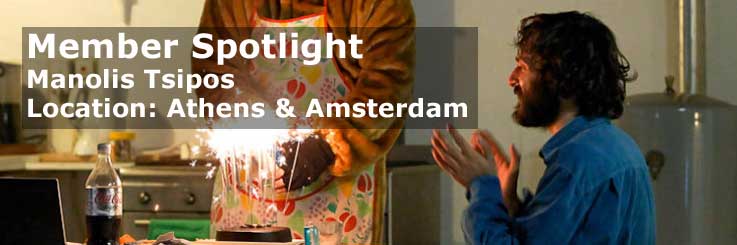
Manolis Tsipos (Athens & Amsterdam)

manolis-590x196.jpg


Occupation:
performance maker, performer, writer, DasArts attendant

Bio
He was born in 1979. He is currently a participant of DasArts-Master of Theatre, in Amsterdam, The Netherlands. He is co-founder of the theatre collective "Nova Melancholía", based in Athens, Greece. He is a performance maker, performer and writer.

1. Can you tell us a little about your work, your history and your performative concerns.
I am a performance maker, a performer and a writer. I come from Greece, but I am currently based in Amsterdam, where I am a DasArts participant (Master of Theatre, Amsterdam School of the Arts). My work is gradually moving towards researching the function of choreography and of dance in a performance, both physically and conceptually.

I have co-founded an Athens based collective, Nova Melancholia, which is a group that follows methods of physical and devised theatre and also methods of visual arts performance. My work with Nova Melancholia has been so far mainly site-specific and it tends to conceptualise the performer’s body as a living and moving sculpture on stage. Furthermore, the group prefers to stage non-theatrical texts, creating spectacles that combine both contemporary dramaturgy and unconventional playwriting.

I have also co-founded the Athens based Institute for Live Arts Research, which is an initiative about bridging the gap between the theoretic discourse on the contemporary performing arts and the performance making and all contemporary artistic practices.

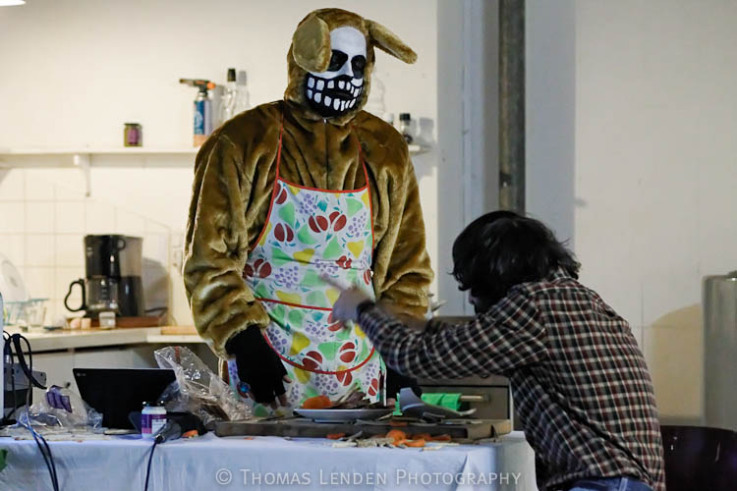
TML20101016_12486-590x393.jpg


READ MORE-->

Read more…
Eleanor BauerA Dance For The Newest Age (the triangle piece)02.10-12.2011Kaaitheater20 square SaincteletteBrusselsThe audience sits on three sides of an equilateral triangle. In the middle, six dancers perform through a system of shifting tripartite symmetries. Inhabiting three-fold paradigms such as solid-liquid-gas, past-present-future, nature-society-spirituality, head-heart-hand, idea-material-form, or sensation-imagination-expression, the emergent relationships negotiate balance, tuning, order and entropy.READ MORE-->
Read more…
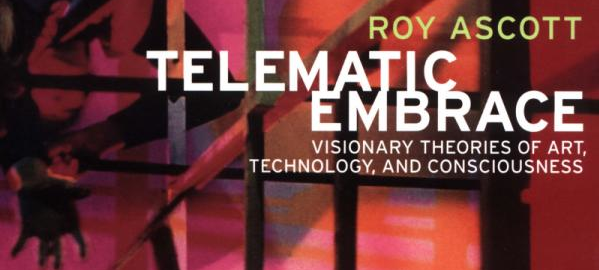
Picture-6.png?width=700

Long before e-mail and the Internet permeated society, Roy Ascott, a pioneering British artist and theorist, coined the term “telematic art” to describe the use of online computer networks as an artistic medium. In Telematic Embrace Edward A. Shanken gathers, for the first time, an impressive compilation of more than three decades of Ascott’s philosophies on aesthetics, interactivity, and the sense of self and community in the telematic world of cyberspace. This book explores Ascott’s ideas on how networked communication has shaped behavior and consciousness within and beyond the realm of what is conventionally defined as art.


READ MORE-->

Read more…

Mundo Perfeito means: “perfect world”. This company is based on a kitchen in a small apartment in Amadora, a city in the suburbs of Lisbon. The company’s name translates the irony of a critic way of regarding the present and the idealism of an optimistic behaviour towards the future. It is also a name that makes people smile, for whatever reason.

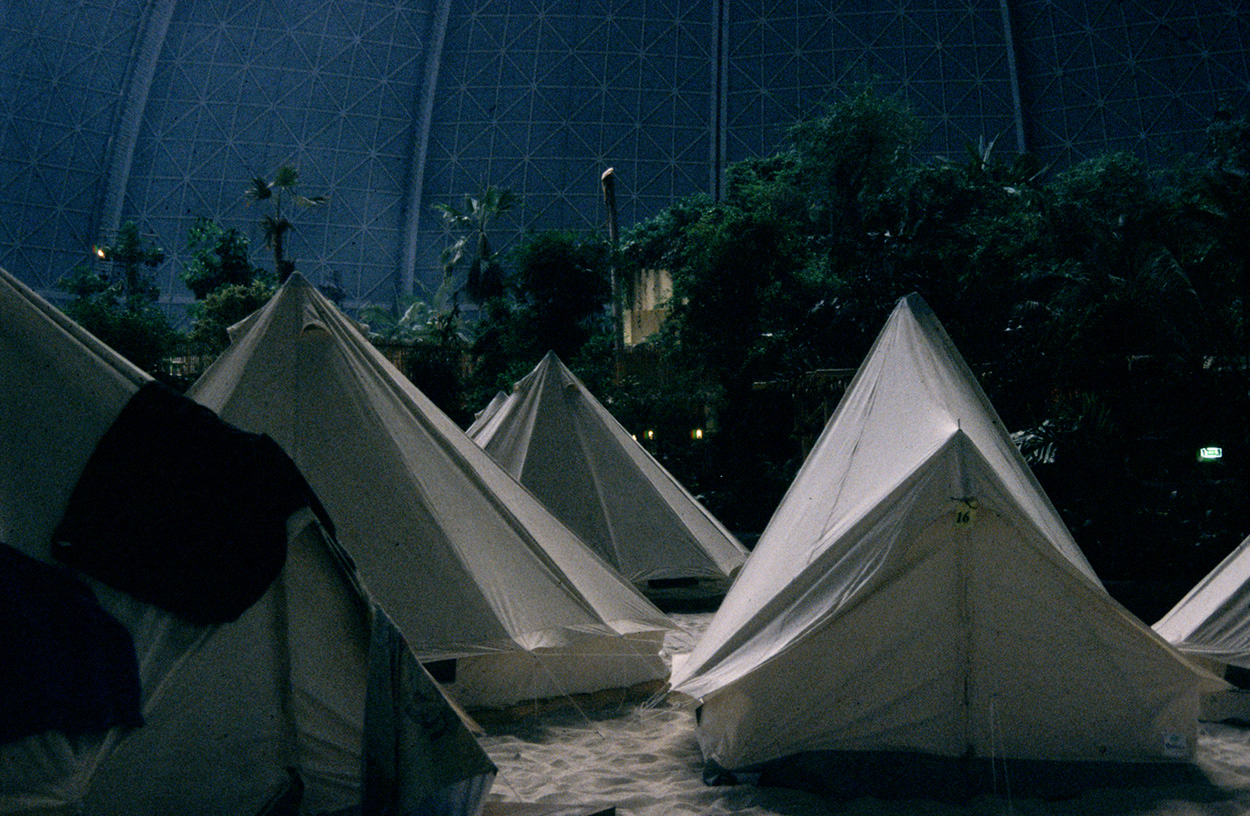
Bobbysands1-590x390.jpg

Organized around the artistic work of Tiago Rodrigues, this structure is also directed by Magda Bizarro and has produced 10 performances since 2003. Mundo Perfeito is recognised by the quality of its work and a permanent drive towards innovation. They stand out for an intense work with authors and new dramaturgy.

bobbysands2-590x390.jpg

READ MORE -->


Read more…

My Cyber Identity

I have two different names:

Liliana Goldman (maiden name)

Liliana Carrizo (married name)


According to a U.S. census information website (http://www.census-online.us/search/GOLDMAN,LILIANA) there are 5 of us “Liliana Goldman”s who exist (at least in this part of the world). One of my alter-cyber-identities is a pug, who happens to like fine jewelry: http://www.facebook.com/people/Liliana-Goldman/100000632676599. Another is a girl on myspace who has one friend. His name is Tom Anderson. When I take a midde name, M., I become an electric engineer in Maryland, and when I take the last name “Cohen” I become a building owner in Brooklyn who was sued by a construction worker. The case went to the New York Supreme Court and is still pending. As Mrs. Cohen I also have an unclaimed stimulus check which I would love to get a hold of.


A LOT of stuff popped up about some non-profit work I did in Mongolia (actually me), so much so that “mongolia” is suggested as an additional search term when my name is typed into google, which I thought was a little strange:

http://ourworld.worldlearning.org/site/News2?page=NewsArticle&id=5881

http://ourworld.worldlearning.org/site/News2?abbr=gen_&page=NewsArticle&id=6703 

www.nafsa.org/_/File/_/IE_MayJun07_ActiveEngagement.pdf

http://www.asuult.net/nemesis/mongolian_judiciary/newsgoldman.htm

http://www.charity-charities.org/Colorado-charities/Boulder_8.html

http://www.pri.org/theworld/?q=node/3602

http://ourworld.worldlearning.org/site/News2?page=NewsArticle&id=5159

http://chestnuthilllocal.com/issues/2009.04.23/locallife3.html

http://www.musicinthemoment.com/communitycal/view_entry.php?id=46&friendly=1
http://www.travelofftheradar.com/2008/01/reindeer-herding-in-northern-mongolia/


There’s some info about jazz performances I did at Williams College in undergrad and at UIUC:

http://www.williams.edu/admin/news/releases/148/


As “Lili” Goldman I have many more alter egos:

I’m a cute baby https://www.youtube.com/watch?v=dOoICs9QvUA

Someone who’s really into sports cars http://www.facebook.com/people/Lili-Goldman/1637004446

And a travel author and watercolor painter https://www.youtube.com/watch?v=6tfjwtjvlwI who co-wrote a book called The Science of Disorder: Understanding the Complexity, Uncertainty, and Pollution of Our World.

I’m also a high schooler who’s a singer and ballet dancer http://www.youthinarts.org/td_members.html#lgoldman, and I was thanked by a friend in his dissertation at Duke: http://dukespace.lib.duke.edu/dspace/bitstream/handle/10161/2382/D_Jarrin_Alvaro_a_201005.pdf?sequence=1. Additionally, you can count me among the members of the Florida State Hispanic Chamber of Commerce, and I’m listed as a contact for finding wedding dresses in Shanghai.


As “Liliana Carrizo” I am definitely Latina. I’m a medical doctor in Mumbai, India, originally from Cordoba, Argentina http://in.linkedin.com/pub/liliana-carrizo/4/b55/975. I'm also some random lady in Barcelona, and a clothing designer in Buenos Aires:

http://www.facebook.com/pages/LILIANA-CARRIZO-MODA-Y-ACCESORIOS/335648185733, http://www.lilianacarrizomoda.com.ar/


I’m also a co-author of an article called “Apoptosis induction is associated with decreased NHE1 expression in neonatal unilateral ureteric obstruction” in the British Journal of Urology

http://onlinelibrary.wiley.com/doi/10.1111/j.1464-410X.2007.06840.x/abstract, and a 39 year-old lady from Argentina on some dating websites who wishes to “make friends” with a guy between the ages of 34-45: http://badoo.com/01122540288/


I’m a FLAS fellow (actually me): https://www.ideals.illinois.edu/bitstream/handle/2142/17425/CGS.newsletter.fall2010.final.pdf?sequence=2


And someone who wrote her Master’s thesis on Mongolian music (also me):

https://www.ideals.illinois.edu/bitstream/handle/2142/18405/Carrizo_Liliana.pdf?sequence=1


And finally, when I am Liliana Goldman Carrizo, all that pops up is my profile on dance-tech.net!

Read more…

Volunteer for TV Dinners Festival!

Chisenhale Dance Space is looking for volunteers to help with our TV Dinners Festival. TV Dinners is a 4-day festival celebrating dance, film and food and was hugely successful last year. Each day of TV Dinners is a different event.

The festival schedule is as follows:

Wednesday March 16th- Dance Film Pub Quiz night 7-11:30pm

Thursday March 17th- New Dance Film Screening and Movie 7-11:30pm

Friday March 18th -Commissioned Performances from Jenny Edbrooke and Boogaloo Stu 7-11:30pm

Saturday March 19th- Family Film screening and film-based dance classes for children 10-3pm


We need 4 volunteers each day to help us with the running of this festival at Chisenhale Dance Space, which the Guardian calls the "secret way forward."


Please email jess@chisenhaledancespace.co.uk with your details, why you would like to help out and if you have a preference for days you might want to volunteer.

Read more…

12249486682?profile=originalEclectic weekend dance performances at the Dance Complex in Cambridge, MA, portrayed the diversity of talent and culture that is embedded in lifestyle, here, during the 21st Century.  The Dance Complex itself, formed in 1991, in order to secure the historic Odd Fellows Hall as a means to “promote, advance, sponsor, facilitate, and nurture creative and artistic work,” is a creation born of democratic, intellectual, and aesthetic ideals.  A physical locality coupled with a visionary mindset where “securing a community of artists is a higher priority than establishing an organizational bureaucracy,” the Dance Complex is the perfect venue for producer Honey Blonder to promote mixed genres of hip hop, ballet, modern, jazz, disco, street funk, belly dancing, step, gymnastics, and an all-male cast of full contact, jazz-funk dancers dressed in Santa Claus hats. 

Rainbow Tribe, Kelley Donovan, B Side, Contemporarily Out of Order,

Disco Brats, Derrick Davis, Brookline Academy of Dance, Deepa Srinath, Bright Pearl Dance Company, Johara and Jim Banta, and Legacy Dance Company, marked the line-up for two evenings chock-full of synchronized, soulful, innovative and interesting choreographies. Some of the most memorable contrasts included:

Men dancing in sneakers, while executing 180 degree dips and flawless turns (Rainbow Tribe); perfect spirals, arabesque layouts and Graham contractions (Brookline Academy); Egyptian costuming and shimmies (Johara and Jim Banta); the effortlessly flowing hands, “petite winged arms,” and repetitive circles (conducted with bowl on the side of her angled head) by (Bright Pearl Dance Troupe); spectacular sparkling outfits, hot pants, and disco white boots (with taps), and full body lifts (Legacy Dance);  the all-maleness of Bside; and amazing modern physical feats by Samantha Wilson and Laurel Reveley (Kelley Donovan and Dancers). 


These were, of course, in accordance with inherent nature of all tensions associated with the art of dance and of the Christmas holidays, punctuated by a stilling, maybe even disquieting performance by singer Steffani Bennet of “winter Song, written by Sara Bareilles and Ingrid Michaelson, and “Have Yourself a Merry Little Christmas,” written by Hugh Martin and Ralph Blane. Her beautiful yet haunting voice reminded me of our human frailties and imbalances, in the face of a holiday marked by rejuvenation, reconciliation, and renewal of spirit. 


Similarly, the opening 30 minutes was characterized by Alissa Johnson, a frozen white ballerina (stockings, leotard, skirt), accented by silver bands on her thin arms, a silver Tiara, and lone silver ball held lethargically in both hands, while she sat motionless on a box, her feet not properly crossed in the “fifth position” perfect mode. No breath or heart rhythms could be detected. Shadows cast from one bright light behind her right shoulder only intensified the ambiguousness of her being – at once childlike and innocent – evoking the holiness, peace and spirit of the season – while simultaneously detached and disassociated from any body or (seemingly) any emotion. 


Quieted in that moment, I couldn’t help feel the tightening in my temples, the crinkling of my brow, and the slow squeezing of warm tears out of my eyes’ corners, as memories of those loved and lost blurred my vision of that unmovable, meditative figure that resolved into the contemplations of my mind.  In acknowledgment of the emotional, spiritual, and aesthetic pleasures of the season and the night to come, I thanked God for the opportunity to celebrate a personal and collective humanness with an audience from Cambridge, Massachusetts, and 12 Dancers Dancing.  Hats off to Honey Blonder for a job very well done.

Read more…

Last Dance of "Mama" Fatou N'Diaye

12249484299?profile=originalSaturday evening, January 8, 2011, marked the final performance of “Mama” Fatou N’Diaye and the company she founded in 1981, “Silimbo D’Adeane,” at least with her as its full-time artistic director in the City of Cambridge.  As master dancer, choreographer, and cultural arts educator for over 30 years in African and the U.S., she returns to her roots in Senegal this week to continue her work in a warmer climate.

Having begun her professional career at age 17 in her native Adeane, Senegal, Fatou N’Diaye rose quickly to stardom, performing in the Daniel Sorano National Theatre of Dakar, “National Ballet of Senegal,” traveling with the president of Senegal on official visits to countries – including China, later in popular television productions, with special appearance in “L’lle de Diama,” (Michael Douglas), and as a featured role in WGBH-TV Basic Black (documentary on dance’s healing power in cultures around the world). (http://www.silimbo.com).

Moving to the U.S. in 1991, she toured most major cities with “Silimbo,” then organized

La Adiyana Bamtamba Courocoto, West African Dance and Drum Conference, 1996.  She received grants from the NEA and D.C. Commission on the Arts and Humanities, supporting her art in the Washington locale.  Mama Fatou has taught in Boston, Cambridge public schools, at Harvard University, the French Library, and countless community and arts centers throughout Massachusetts and the entire country. 

Her mission, as mentor and dance historian, is to bring all levels of dancers to the stage, helping to spread the culture and craft of her Senegalese dance, drumming, and songs pan-nationally, through workshops, conferences, weekly classes and company rehearsals, so that the folklore and traditions of Senegal, in their original forms, can be shared. 

Passionate to the core, she instills the love of her rich heritage, enabling each of us through understanding of Senegal’s rituals, ceremonies, and daily living events. Learning through her is easy because she tells the story behind the dance, ensuring that we understand the meaning behind the movements, the drumming, and songs sung in her native language.

From a personal perspective, as one of her students and company members of  “Silimbo,” I must point out that Mama Fatou is much larger than any of her accomplishments.  With her wide, inviting smile, penetrating eyes – perceptive, wise, and compassionate, her polished skin – inviting and warm, and deep, honey-toned voice, we are reassured from the moment Mama steps into the dance studio. 

Her appearance is one of respect and awe, always composed, professional, direct, intuitive and able to pull diverse ages and backgrounds together.  Like mother earth, her wholesome, centered-ness, like the Feng Shui “nourishment,” provides solidarity and a foundation for all living elements and beings, of which there can be no harmony or life in its absence (http://www.fengshuicrazy.com). 

Or like the proton – positively charged, subatomic particle – which resides in the nucleus of the atom – the basic unit of all matter, she is stable, indivisible, “uncuttable” – attracting and bounding the other particles through an unseen electromagnetic force (http://www.wikipedia.org).

Fatou N’Diaye-Davis speaks the universal language and art form called “Love.”  She embraces arts for humanity, fellowship, inclusion, and wields an undying resolve to spread the word of dance from the Diaspora to people everywhere.  Her enchantment with life, people, and performing arts is contagious, bounding free from any barriers that the unenlightened should attempt to orchestrate. 

Her leaving is all but unbelievable, and its reality has surely not resounded at the deepest level.  I cannot speak of life and dancing without her without exuding an enormity of gratitude and emotion.  All’s I can really do is wait in joyful contemplation of our next meeting.


With MUCH LOVE and GRATITUDE to Mama Fatou N’Diaye-Davis.

Please visit her here: http://www.facebook.com/profile.php?id=100000745554956

Read more…
Tina-Ruisinger-av_compresse.jpg© Tina Ruisinger

Meg Stuart (born in New Orleans) is an American Choreographer and Dancer based in Brussels, Belgium. She is one of the key figures in the European and International contemporary dance world. From 1983 to 1986 Stuart studied at the New York University where she received a BFA in dance with a main focus on release technique and contact improvisation. From 1986 to 1992 she was a member of the Randy Warshaw Dance Company. In 1991, Stuart presented her first full evening length choreography Disfigure Study at the Klapstuk Festival in Leuven, Belgium. Within the following two years, the production was shown 42 times in 17 cities (Berlin, Paris, London, Madrid, Lissabon, New York, among others). The Klapstuk Festival offered Stuart a residency in Leuven.

In 1994 she moved to Europe completely and founded her own company Damaged Goods. in Brussels the same year. From 1997 Stuart/Damaged Goods was an artist-in-residence at the Kaaitheater Brussels. Between 2001 and 2004 she had a residency at the Schauspielhaus Zürich invited by Christoph Marthaler. Since 2002 Volksbühne Berlin and Damaged Goods are collaborating. <from Wikipedia>

BLESSED-6-photo-Chris-Van-der-Burght.jpg
© Chris Van der Burght

Works
Disfigure Study, 1991
No Longer Readymade, 1993
Swallow my yellow smile, 1994
No One is Watching, 1995
Inside Skin #1 They live in Our Breath, 1996
Splayed Mind Out, 1997
Remote, 1997
appetite, 1999
Comeback, 1999
Snapshots, 1999
Highway 101, 2000/2001
Alibi, 2001
Henry IV, 2002
Visitors Only, 2003
Das goldene Zeitalter, 2003
Forgeries, Love and other Matters, 2004
Der Marterphahl, 2005
REPLACEMENT, 2006
It's not funny!, 2006
Blessed, 2007
Maybe Forever, 2007
All Together Now, 2008
Die Massnahme/Mauser, 2008
Do Animals Cry, 2009

Video
Meg Stuart videos on Contemporary Performance Network -->

Read More-->
Read more…

Who am I anyway?

Am I my resumé?

Am I even that person that goes by the name I call myself?

And how did FA get to be such a long, long way to run?


Weighty questions, not answerable by a Google search.

(Well maybe FA. That's Oscar Hammer-Styne trying to be clever.)


At the outset I would have said that I have been pretty much myself on-line. But my facebook page is rarely frequented by me, and when I do post, I generally try to be pithy. Pithy is not really me. I go on at length in person, and at even greater (endless) length in my own head. Sleep doesn't slow me down much, it just unleashed those demons of the id that want to rant and rave.


In the end, I decided that Googling "Ken Beck" did not shift my self concept very far. I was impressed by two of the "Ken Becks" that ain't me - the Boston Artist and the California writer - but this is not a mediated presence for ME.

220px-Red_shoes.jpg

My one whimsical, deliberate departure from literal interpretation of self is a significant one: I am jcraster on youtube. Craster was Lermontov's composer in "The Red Shoes," (Which Anton Walbrook pronounces 'shooss'). Walbrook's Lermontov gets all the great lines relating to Craster: "let's see what you can do in the way of a little REwriting." But Craster (Marius Goring) does get to say "you see this STICK! Follow it!!" He also gets the girl, if only for a short time. For me, taking up this identity is a way of acknowledging the hack work aspect of dance musicianship (or by extension, my career in general) which goes with the territory of collaborative work. Craster is my alter ego when I make work which is not up to par. The quality went out before the name when on.


Why did I take up that identity for youtube? I have not posted anything of questionable quality: my wedding video, a techno stunt in which I do about three significant things at once, and lately, three recordings of Edison records from my collection. Perhaps it frees me to be more mediated as a potentiality.


Who am I? I can't answer in a short form. Give me lebensraum: symphony or novel, body of work, a life. As a mediated presence, I get to inhabit some other plane: to be an actor.

Read more…

Jeff Zahos - Online Identity

ASSIGNMENT #1

“Who Are You?” #1: Construct your Internet identity using search engines,
video, and social networking sites.  Present to class via web or presentation software.


Jeff Zahos - An Internet Identity


First big question - "what other people come up when I search my name?"

Answer: Mostly me


  • The first several results on Google searching "Jeff Zahos" go a long way to creating my online identity.  The first 4 results are pages from my personal/professional website "www.jeffzahos.com".  The page headings indicate that I am interested in "recording techniques", "music" and "sound design".  Pretty accurate, but that's because I made the pages.  Punching around the site is a bit confusing - Tags, categories and pages all kind of get mixed up - maybe this reveals something about my personality...  Haven't really created a well-designed, maintained site with a clear focus.  Maybe this is intentional, maybe not...  Only I and my "analog" friends know that the musician/recording engineer focus of my internet presence is not so up-to-date to my current station/interests/direction of life - There is a lag between my internet identity and my analog world identity.  (Maybe if I kept a blog religiously, it would be closer).  I have not been much of one for online social sharing - real-time modes of sharing suit me much more - I enjoy the in-the-same-space experience.
  • My public Facebook page reveals quite a bit about me too.  (http://www.facebook.com/jeff.zahos)You get the sense that I am a drummer - my profile photo is me slamming away on some drums.  I'm a fan of the Foo Fighters and Ryan adams and enjoy hockey in addition to audio and music.  MySpace reveals less, but even the photos indicate an involvement or interest in music...
  • My first post on dance-tech.net is referred to (and displayed) on dancebloggers.com "A Dance blog made out of all dance blogs!  Additionally, there is a link to my name on dance-tech.net in reference to our class last year.
  • Jeff's minimal Twitter activity (the only entry on his profile is "Hello World.") maybe says something about his tendency to start things and not finish them...  Although those who know me know that I am tending away from technology-based social communication, and that I am definitely not in to texting.
  • Other things revealed on the first page of results: Apparently I've been a member of I-Pan, a steel band at the University of Illinois, I am an influence of the band "The Dakota", and I once built a vibraphone damping pedal and mechanism and resonators.  Actually, there is ample evidence of the bands I've played in - show announcements all over from I-Pan, Backyard Shark, and starting to see more from Faster Forward. 
  • You also find quite a bit of evidence of my involvement with the Audio Engineering Society - old newsletters I'd authored, a .pdf of a report on a project to build an infrasonic detector that I was involved in, Engineering Open House programs, etc.
  • I am the subject of a podcast from the Champaign Central Bands website.  I was interviewed about my work as a freelance audio engineer.
  • Later, you find an early attempt at a wordpress blog that reveals an even broader definition of myself: "Hi! My name is Jeff Zahos. Here you will find information on my work as a musician, electronics technician, audio recordist, instrument technician and music educator. Notice the different pages on the menu bar and feel free to browse to learn more about me."  Again, those who know the analog me know the exploring and honing that I've been undergoing, not reflected online.
  • I also won some ESPN anchor bobbleheads back in 2001...
  • One of my favorite links is a link to www.recordingjones.com (my old recording business) on http://sandpaper.twowik.com - the tag is "Making a shark using sandpaper"
  • I find how many "linked" video sites have my name listed - mostly from a video used in a live performance that I was involved in - actually a kind of "mediated score" from a Cornelius Cardew piece which I performed as part of Colab, a class I was involved with last semester (FA10)
  • Also the premiere of a very strange musical/theatrical piece I played in at Truman State University.
  • It is also very interesting to look just at images - whether on Google image search or flickr pages that return my name - Backyard Shark.

Second big question:

"Does my internet identity 'match' my 'real' identity?"

  • Maybe it's because I've been interested in my internet identity for a long time, but I really didn't find so many surprises on my search.  I feel like it does give a pretty accurate (if not incomplete) picture of my life path, at least for the last 10 years or so.  It is quite scattered, however.  ...but maybe this says something about my identity...

Thoughts:

  • I think one of the most interesting things about this exercise is that an internet search instantly reveals so much contextual information about my identity - the people, activities, places, activities, etc. - much more quickly than knowing me, and learning these things over time, by common experience or by discussion.
Read more…

HEY WAKE UP!!!

So, to keep things easy, I'm posting the "journal enteries" on Youtube... I tried to experiment with the time feature of my computer's camera to give an idea on what I did this weekend... go to the website...

https://www.youtube.com/user/rdagit


And Yes, Tech is sometimes that boring, but I thought it was funny, as I didn't realize I twirrled my thumbs. LOL... Anywhoo, enjoy...


On other Note; Go to African Company Present Richard III if you get the chance, it should be good. Yes, I know that whomever did the schedule messed up a little bit due to the fact the dance is also having dress and opening at the same time, but I say that it's worth seeing both.

Read more…

12249486096?profile=original
Tonight 6-8:30pm Dance on Camera at Big Screen Project

See Dance on Camera shorts tonight at The Big Screen Project (BSP) and meet over 45 artists coming to celebrate the screening of their work. BSP “A Real Space Where People, Media, and Culture Connect” is an innovative venue for video, film, live and interactive content that sets a new standard for the urban, cinematic experience. Its 30 x 16.5 ft. HD format LED screen is on a wall outside in a  public plaza adjacent to the Eventi, a new 54-story multi-use building on Sixth Avenue between 29th and 30th Street in New York City. BSP is viewable from 29th and 30th streets (close to 6th Avenue), the atrium, FoodParc, and Bar Basque, a striking restaurant designed by BLADE RUNNER’s Syd Mead. Headsets upon request. Visit : The Big Screen Project Schedule.

Dance Films Association’s 39th annual, internationally touring festival is co-produced by The Film Society of Lincoln Center, which provides its Walter Reade Theatre in Lincoln Center Plaza between January 28 and February 1st for 10 repeating programs, 4 shows daily, along with receptions, panels, talks, and an photography exhibit by James Starkman celebrating parkour. To buy tickets visit: filmlinc.com

Exhibit & Symposium in Walter Reade Theatre, Frieda & Roy Furman Gallery - FREE
For program details visit: Exhibit & Symposium Schedule.

11am, Friday January 28
Practice mash-up: dance/film/art (or how to work with rigor and risk)

noon, Friday, January 28
Distribution models for dance films

noon, Saturday, January 29
Screening opportunities for dance films

noon, Sunday, January 30
Felix presentation by Gabriela Estrada.

1-6pm, daily, until February 1 at Baryshnikov Arts Center at 37 Arts experience the master illusionist Billy Cowie's 3-D video installation. MEN IN THE WALL, a four-screen stereoscopic screen dance. 3D glasses allow the viewer to enter this multi-cultural world of four men, whose shared framed lives reveal a public quartet of private differences. Also shown are GHOSTS IN THE MACHINE and TANGO DE SOLEDAD. Award-winning Scottish video artist/composer Billy Cowie creates a delightfully amusing montage that beguiles as it inspires.

DFA’s annual Dance On Camera Festival celebrates the immediacy, energy, and mystery of dance as combined with the intimacy of film. Considered the “mother” of dance film festivals, DFA’s Festival presents a broad range of independent dance films, whether they be documentaries, shorts, narratives, or  animation. The year round touring program has been a revenue source for dance filmmakers since 2000.

Discounts for DFA member and Dance Affiliates Dance New Amsterdam, Movement Research, and Dance Theatre Workshop. Become a member of DFA now

Read more…

Blog Topics by Tags

Monthly Archives