
Hello,
I'm directing and choreographing a site-specific dance in Lagos, Nigeria to enact the potentialities of choreography as a socially active force in collaboration with 11 Nigerian choreographers. Join us June 25, 2011 at 4:00PM in the vibrant, hyper-entrepreneurial metropolis of Lagos, Nigeria, dancing together as a community with the idea of establishing free public drinking fountains in the city! The audience gathering point is FREEDOM PARK at Broad Street, on Lagos Island, and will follow the dance beyond the park into the streets. The performance is FREE and will happen rain or shine!
Sponsored by the Society for the Performing Arts in Nigeria (SPAN), the performance is part of the Global Water Dances world event -- http://www.globalwaterdances.org -- in which communities all over the planet will unite to raise consciousness of the global water crises.
Please share this invitation with your friends in Lagos and follow our process on Facebook at http://www.facebook.com/home.php?sk=group_204457429589482&ap=1
See you there!
Cheers,
Andrea Haenggi
Director, Choreographer, Dance Artist
Fr
All Posts (2056)
Sort by
Hello all,
The screen-dance evening Body Writes Mood will be showing on the 23rd of June at 22:00
as part of the Intersection Project at the Prague Quadrennial.
free entrance to the outdoor cinema at the Piazzetta between the National Theater and New Stage Theater. Come and join us!
image from The 4th Circle of the Dragon by Diego Agulló
About the evening- Body Writes Mood:
The marriage of dance and camera enables a choreographer to place the moving body in new locations- from a wild open landscape to an intimate room. It also allows positioning the spectator in different perspectives in relation to this body.
This compilation brings together nine screendance films where different environments are the raw material used for carving a place with movement. By occupying space with the body, the performers make distinctions, articulate the surroundings and project a state of mind. These various states of mind, moods and sensations- conceived in the meeting of body and its exterior- are the protagonists of this screening.
Curator: Lior Avizoor
Curatorial assistant: Yaara Nirel
Total running time: 50:00 min
The films:
1. Small dance
2007, USA, 01:30
Direction: Olive Bieringa
Choreography: Steve Paxton
__
2. The 4th Circle of the Dragon
2011, Morocco, 6:40
Direction, choreography and music by: Diego Agulló
__
3. Continuum
2009, France, 11:00
Direction and Choreography: Manon Le Roy
Music: Yann Leguay
__
4. Geistern
2009, Germany, 06:00
Direction and choreography: Dennis Deter, Anja Müller and Diego Agulló.
__
5. Hundred Eighty
2008, Belgium / Spain, 08:00 (extract)
Direction and choreography: Albert Quesada
__
6. Sublevados
2009, USA, 02:40
Direction and choreography: Martin & Facundo Lombard
Music: Fernando Otero
__
7. A Dance With Sacha Green Pathroom
2010, France, 05:30
Direction and music: Elliot STOREY
Choreography: Elliot STOREY and Kathie Serniclay
__
8. Ring #3
2008, Australia, 01:00
Direction: Suzon Fuks
Choreography: James Cunningham, Scotia Monkivitch and Suzon Fuks
Text: Fernand Shirren
__
9. HANNAH
2010, UK/Greece/Iceland, 05:30
Direction: Sergio Cruz
Choreography: Sergio Cruz and Hannah Dempsey
Music: Roberto Crippa
__
12.06.11
Le Festival de danse contemporaine EXTRA, est né il ya trois ans en tant que projet transfrontalier entre les villes d'Annecy et de Genève. Il s'agit d'un projet dans le cadre de l'initiative européenne, qui vise à encourager la mobilité entre les deux pays.
Il fournit ainsi la possibilité de les artistes contemporains et des artistes émergents originaires principalement des pays arabes de présenter leurs œuvres dans un cadre idéal.
Focus, qui fait partie des activités proposées, est une série de tables rondes pour présenter professionnels de la danse, des journalistes et critiques de danse modérateur de la conférence. L'un d'eux a été «Les conditions de travail et la création d'artistes en provenance des pays du Sud, du sud du bassin méditerranéen.
Des noms comme Taoufiq Izeddiou (Maroc), Omar Rajeh (Liban), Hafiz Dhaou (Tunisie), Ali Moini (Iran) sont depuis plusieurs jours, en encourageant l'échange d'idées, les processus de création, les ressources et les moyens utilisés de manière collaborative.
D'autres activités ont également lieu dans un esprit de collaboration, est la grille Lab Marlon Barrios encourage et célèbre sa troisième édition en EXTRA Festival 2011.
Auparavant, le concept de Grid Lab, avait déjà été présentée à Istanbul, Rio de Janeiro, Varsovie, Dresde, Lugano et Milan (Côme). En Espagne, Nerja Dance Festival 2011, qui aura lieu 26 au 29 Octobre, veulent tenter l'aventure.
Le journalisme citoyen et de GRID LAB
Un laboratoire itinérant ouvert et performative dans le domaine du Mouvement Arts, est ce que Marlon a mis au point, le Venezuela, qui vit à New York, qui a été invité'S Mouv Madrid et de Barcelone dans la chaudière l'année dernière.
Il se compose d'une ville des médias qui utilise des outils logiciels libres et donne de la visibilité de l'événement au coût le plus bas, à travers un processus participatif. En parallèle, une installation de l'atelier ainsi que le contenu des événements qui ont lieu pendant le Festival et diffusées en temps réel sur Internet.
La technologie Internet la plus innovante est utilisée pour recueillir et centraliser les informations à modifier et d'assembler une équipe.
Dans la forme de médias sociaux, les informations recueillies par les médecins participant à l'atelier, a envoyé à vivre sur Internet (streaming), avec une qualité d'image suffisante pour relayer l'information à toute une communauté composée de quelque 4000 membres dans aujourd'hui.
Cette communauté d'utilisateurs de la danse est ce qui est l'alimentation de Marlon Dance-Tech.net portail dont il définit la place de la prise 'dance facebook comme essentiellement à 2 disciplines: la danse, la technologie et la danse expérimentale.
Tech Dance communauté compte actuellement plus de 250 interviews allant de Forsythe à Emio Greco, aux artistes émergents de la nouvelle génération. L'impact global est énorme. La présence sur Internet ainsi, depuis qu'ils se soucient des informations en plusieurs langues.
L'originalité du projet réside dans le fait que non professionnels Filmakers qui effectuent les enregistrements, et des entrevues, mais les utilisateurs et les praticiens (un étudiant chinois des Beaux-Arts), en créant son propre public.
L'innovation devient un point de réflexion. Festivals accueille la
Grille de laboratoire, de savoir qu'il est de partager les connaissances au sein d'une philosophie de soins, et aucun consommateur. La communauté elle-même est responsable des processus d'auto-régulation et d'empêcher les membres qui ont l'intention d'utiliser le marketing agressif pour arriver à leurs fins.
En plus d'explorer dans les domaines de l'innovation dans le processus créatif de la danse, liés ou non de nouvelles technologies, de la danse-tech situé un troisième niveau appelé Dance-télévision publique, qui accueille les acteurs de danse qui souhaitent faire connaître leurs activités, services et d'informations.
Grille Lab initiative qui vient à travers le monde alimentation communautés de l'information comme dans ce cas-TechTV danse est un phénomène culturel qui a sans aucun doute un bel avenir. C'est écologique, démocratique, économique et avec l'optique de Do-It-Yourself.
Ein Interview mit vier Protagonisten
„Wenn wir uns schlecht fühlen, gehen wir fort und kommen danach wieder.“
Über die Kunst, in Bulgarien Tanzstücke zu machen
Ein Interview mit vier Protagonisten
Galina Borissova und Mila Iskrenova zählen zu den seit den neunziger Jahren herausragenden zeitgenössischen Choreografinnen Bulgariens, die auch pädagogisch und wissenschaftlich im In- und Ausland tätig sind, Violeta Vitanova und Stanislav Genadiev gehören der jüngsten Generationen unabhängiger Künstler an und sind Gründer des Kinesthetic Projects sowie Träger des erstmals an freie Tanzschaffende vergebenen Theaterpreises Ikar. Das Interview mit den ständigen reisenden ChoreografInnen führte Demna Dimitrova (M.A. Arts and Contemporaneity, 20th – 21st Century) von Sofia aus für uns per E-Mail
Demna Dimitrova: Wie kamt ihr mit zeitgenössischem Tanz in Kontakt und was hat ihn letztlich zu eurem Beruf gemacht?
Galina Borissova: Während ich klassischen Tanz an der Nationalen Ballettschule studierte, fühlte ich mich wie das hässliche Entlein. Diese streng kodifizierte Technik war nicht sonderlich bequem für meinen Körper, so dass ich mich nach meinem Abschluss 1985 aus rein technischen Gründen dem Erlernen von „ursprünglicheren“ und „natürlicheren“ Herangehensweisen an den Körper zuwandte. Ich begann zu improvisieren, wobei ich Formen oder die Verwendung von Techniken und Stilen mied, die Westeuropa und Amerika zu bieten hatten. Denn wenn es um das Choreografieren geht, vermeide ich eher das Verwenden von Techniken, destrukturiere und zerlege dieses ganze Wissen, um einen neuen Kontext zu erhalten, ein wenig unbequemere Tänze – schief und ungeschickt, so ist mein Tanz. Ich denke, man könnte mich als einen undefinierbaren, experimentellen Mutanten bezeichnen, der sich in seinem eigenen Milieu entwickelt, ohne sich mit den globalen Tendenzen zu vergleichen, deren Grenzen sich sowieso schon längst verwischt haben. Es wird immer schwieriger, auf die Frage zu antworten, was zeitgenössischer Tanz eigentlich ist. Nur die Naiven versuchen, sich eine Antwort darauf zu geben. Damals jedenfalls hatte Louise Bédard, eine Choreografin aus Kanada, die zu Beginn der neunziger Jahre in Bulgarien war, sehr großen Einfluss auf meine Motivation, mich weiterhin mit Tanz zu beschäftigen. Sie provozierte mich dazu, im Alter von 30 Jahren mein erstes Solo zu tanzen, weil ich bis zu jenem Augenblick hauptsächlich mit anderen zusammen gearbeitet und vor allem Gruppenprojekte realisiert hatte.
Mila Iskrenova: Mit fünf Jahren verliebte ich mich ins Ballett, als ich Margot Fonteyn in Schwanensee in Sofia sah. Damals beschloss ich, Ballerina zu werden. Später, als ich die Schule für Choreografie in Sofia abschloss, kam ich mit dem modernen Tanz in Kontakt, durch Margarita Gradečlieva, die den „Graham-Stil“ unterrichtete. Danach vertiefte sich mein Interesse ständig und ich drang immer tiefer in die Materie ein, auch durch meine Ausbildung in Deutschland in den Kölner Sommerkursen und an der Palucca Schule Dresden, in Großbritannien am Laban Centre London – und natürlich durch beeindruckende Persönlichkeiten und Inszenierungen. Eine der Hauptfiguren für mich ist Pina Bausch, die ich glücklicherweise 1998 auf dem Festival Taormina Arte in Italien 1998 kennenlernen durfte.
Violeta Vitanova und Stanislav Genadiev: Wir beide haben 2003 bzw. 2004 klassisches Ballett in der National School of Dance Art in Sofia abgeschlossen. Aber schon in der Schule spürten wir, dass der klassische Tanz nicht unser Tanz ist. Dort hatten wir das Glück, Elisaveta Jordanova kennenzulernen und mit ihr zu arbeiten. Sie war Lehrerin in so genannter „spezieller Gymnastik“, aber eigentlich war das eine Mischung aus Alexander-Technik, Yoga und Improvisation. Nach unserem Abschluss gingen wir in die Schweiz nach Lausanne, wo Stanislav in der Compagnie Linga arbeitete und Violeta ein Praktikum machte. Nach einiger Zeit kehrten wir nach Bulgarien zurück und beschlossen, unser erstes Experiment zu wagen, es trug den Namen: Imago. Dafür erhielten wir den bulgarischen Theaterpreis Ikar für das beste Debüt. Das Besondere an diesem Fall ist die Tatsache, dass ein Theaterverband zum ersten Mal eine Tanzaufführung nominierte und auszeichnete! Das brachte uns später dazu, mit der Hilfe von Živko Željazkov (Derida Dance) und Iva Sveštarova/Willy Prager (Brain Store Project) die erste Organisation für zeitgenössische performative Künste beim Verband bulgarischer Schauspieler zu gründen. Unsere Beziehung zum zeitgenössischen Tanz hat sich von selbst herausgebildet, aus unserer persönlichen Lebenserfahrung heraus.
Wonach sucht ihr in eurer choreografischen Arbeit?
M.I.: Der Tanz ist meine persönliche Frage an die Welt ... Mein komplexes Gefühl für ihn ist gleichzeitig Feststellung und Frage, es ist voller unbekannter Parameter. Im Laufe der Jahre habe ich begriffen, dass es ausreicht, sich selbst zu erforschen, um Kenntnis über die ganze Welt zu erlangen – der Tanz ist mein Spiegel des Lebens. Ich glaube, dass der Körper der „neue Tempel“ in einer neuen Religion der Zukunft sein wird, die den Gegensatz von Körperlichem und Geistigem überwindet, von Materiellem und Metaphysischem – darin liegt auch mein hauptsächliches Interesse an ihm.
V.V. & S.G.: Für uns ist der menschliche Körper ein Universum. In unserer Arbeit untersuchen und erforschen wir diese unendliche Schönheit des Mysteriums, das man „Mensch“ nennt.
G.B.: Meine Fragen ändern sich ständig, so wie ich ständig versuche, zu mutieren und mich zu verändern. Zu Beginn meiner Karriere versuchte ich, originelle Bewegungen und Gesten zu verwenden – unbequem und verdreht. Später habe ich mich für die Statik als Dynamik interessiert, die Dramaturgie der Bewegungen, der Idee ... Ich denke immer mehr, dass ich mich vom Tanz entferne, wobei ich mich auf diese Weise seinem wahren Wesen annähere – der Spontaneität und Alltäglichkeit in gewissem Sinne. Meine letzten Stücke umkreisten politische Themen und beschäftigten sich beispielsweise mit der globalen Erwärmung, dem Rentengesetz, einer Casting - Show im Fernsehen ... Diese Improvisationen sind im Prinzip mit nur wenig Recherche und Beobachtungen zum Thema verbunden. Zum Thema globale Erwärmung stellte ich zum Beispiel einander diametral entgegengesetzte Meinungen über die (un)natürlichen Veränderungen gegenüber. Am Ende leisteten auch diese Aufführungen ihren kleinen Beitrag zum Klimaschutz – durch effektives Tanzen, das ohne Schwitzen auskam!
Wie würdet ihr eure momentanen Arbeitsbedingungen beschreiben und wie beeinflussen sie eure Stücke?
G.B.: Die Bedingungen sind immer noch sehr schlecht, wenn es um einen bequemen Boden und einen warmen Saal geht, um die Dauer des Prozesses, die Instandhaltung der „Bühnen“, die gemietet werden, und die Leute dort, die festangestellt sind. Aber zu Beginn meiner Karriere hatte das keine Bedeutung. Ein junger Mensch fühlt sich viel besser, wenn er irgendwo in Foyers und Kellern, in Ecken und auf Dachböden ist. Das stimulierte uns noch mehr ... wie eine starke Droge. Aber wenn der Künstler 35 bis 45 Jahre alt wird, dann möchte er endlich würdevoll über den roten Teppich schreiten, nicht wahr? Ich habe mich nie beschwert, nicht einmal jetzt. Ich hatte die Möglichkeit, auch im Ausland zu arbeiten und die Situation mit der bei uns zu vergleichen. Immer wenn ich zurückkam, fühlte ich mich hier mehr als Emigrantin, als wenn ich nach draußen reiste.
M.I.: Zum Glück bekomme ich als Choreografin viele Aufträge und kann, besonders wenn ich für ein Theater tätig bin, unter optimalen Bedingungen arbeiten. Wenn es allerdings um meine persönlichen Projekte geht, liegen die Dinge anders, weil sie in die Kategorie „nicht-kommerzielle Kunst“ fallen und dafür so gut wie keine Mittel zur Verfügung stehen. Sogar bei meiner Arbeit mit Arabesque (der größten zeitgenössischen bulgarischen Tanzkompanie mit Sitz in Sofia, Anm. d. Red.), wo mein Budget pro Inszenierung nie größer als 2000 Leva (etwa 1000 Euro, Anm. d. Red.) war, kam es vor, dass ich Kostüme, Ausstattung usw. selbst „sponsern“ musste. Und die Verwirklichung eines Privatprojekts scheint mir absurd, wenn man die Mieten und überhaupt die notwendigen Mittel bedenkt, für die es überhaupt keine Sponsoren gibt.
V.V. & S.G.: Die Bedingungen sind in Abhängigkeit von der Spezifik der einzelnen Projekte improvisiert. Ich denke, wir haben uns bereits daran gewöhnt, sowohl Tänzer als auch Choreografen als auch Manager unserer Produkte zu sein. Natürlich kostet das schöpferische Energie, aber wenn wir überleben wollen, sind das die Bedingungen.
Im Augenblick findet in Bulgarien ein Prozess statt, den die Institutionen „Theaterreform“ nennen. Welchen Einfluss haben diese Reformen auf eure Arbeit?
V.V. & S.G.: Die letzten Informationen, die wir von Gergana Dimitrova von der Organisation 36 Monkeys (Mitglied des ACT – Verband für freies Theater) erhalten haben, lauten: „Im Moment sind wir (gemeint ist die gesamte freie Szene Bulgariens, Anm. d. Red.) nicht im Budget vorgesehen, aber man wird sich Gedanken darüber machen, nach welchen Kriterien man uns einbeziehen soll, weil die einheitlichen Ausgabenstandards, die für die Theater festgelegt worden sind, für uns nicht adäquat sind.“ Im Kultusministerium wurden als Beispiele die ungarische und deutsche Gesetzgebung im Kulturbereich herangezogen, doch unser Gesetz wird zu unserem Bedauern vermutlich weit von diesen wunderbaren Beispielen entfernt sein.
G.B.: Ich glaube, dass die Reformen von innen, nicht von außen kommen werden – von den Künstlern und nicht den Politikern. Ich arbeite seit mehr als 25 Jahren als unabhängige Choreografin, habe mehr als 30 Inszenierungen bei uns und im Ausland auf die Bühne gebracht, insgesamt mehr als 25 000 Zuschauer gehabt, acht internationale Produktionen initiiert, 23 Jahre Lehrerfahrung und zwei internationale Preise bekommen ... und wenn jeder Künstler solche Beständigkeit und Ausdauer an den Tag legt, dann wird auch die Veränderung da sein. Anfang der neunziger Jahre waren die Bedingungen viel ungünstiger. Jetzt gibt es viele Informationen, man reist ohne Visum, in Sofia hat ein Nationalwettbewerb für Choreografie stattgefunden, ungefähr viermal im Jahr organisieren wir Konzerte, wo wir auch neue Projekte junger Choreografen vorstellen, es gibt Stipendien und Weiterbildungsprogramme ... Im Augenblick ist es meine persönliche Motivation, mehr auf theoretischem Gebiet zu arbeiten als auf praktischem, auch gewisse Managementfähigkeiten an den Tag zu legen und an Debatten über die Reformen teilzunehmen, obwohl ich keine große Optimistin mehr bin, wie noch in den frühen neunziger Jahren. Damals gab es Energie, jetzt Pragmatismus.
M.I.: Für mich als Künstlerin war die erschütterndste Tatsache, dass meine Meinung absolut ignoriert wurde, als gegenstandslos und ungültig in Bezug auf die Situation. Die grundlegende These der Reform besteht in der Angleichung des Niveaus der Produktionen an den Zuschauergeschmack, was in der konkreten bulgarischen Situation ein zweischneidiges Schwert ist, besonders angesichts des Fehlens alternativer Finanzierungsquellen für die Kunst. Ich kann die zukünftige Entwicklung der Dinge nicht vorhersehen, aber momentan lastet auf mir die Forderung nach einem vollen Saal, was an und für sich eine Art kommerzielle Forderung ist und zu den entsprechenden Folgen führt.
Seid ihr der Meinung, dass der zeitgenössische Tanz in Bulgarien marginalisiert ist?
M.I.: Diese Tatsache drückt sich in der ständigen Unmöglichkeit (hauptsächlich aus Mangel an Finanzierung) aus, die Projekte zu realisieren, die mich interessieren. In den letzten zwei Jahren waren das bereits vier. Ich bin nicht in der Lage, meine Projekte selbständig zu managen, was sie zu ständigem „Nicht-Zustandekommen“ verdammt.
G.B.: Der zeitgenössische Tanz hat sehr große Kraft, und ich glaube an ein immer größer werdendes Interesse seitens des Publikums und der Kollegen. Er nimmt in Westeuropa längst einen sehr bedeutsamen Platz als Motor der Veränderungen im Theater ein, und er erreicht sogar wissenschaftliche Dimensionen. In Bulgarien ist der zeitgenössische Tanz jedoch nicht vom Massenpublikum anerkannt.
V.V. & S.G.: Der zeitgenössische Tanz in Bulgarien hat keine Tradition aufgrund der verpassten avantgardistischen und neoavantgardistischen Strömungen. Abgesehen davon, dass wir ein sehr kleines Land sind, befindet sich unsere Ausbildung nicht auf dem notwendigen Niveau. Für uns kann das aber kein Problem sein. Im Endeffekt ist Bulgarien nicht die ganze Welt. Wenn wir uns schlecht fühlen, gehen wir fort und kommen danach wieder.
Momentan muss man in Hinblick auf den zeitgenössischen Tanz feststellen, dass seine Künstler im geeigneten Augenblick – und das ist ziemlich oft – Bulgarien verlassen oder manchmal einfach nur verschwinden, indem sie aufhören, im Bereich des Tanzes zu arbeiten. Was bringt euch dazu, immer noch in Bulgarien zu arbeiten?
G.B.: Die Dummheit, die Unfähigkeit, etwas anderes zu tun, die Naivität, die gesunde Lebensweise, das Überwinden von Schwierigkeiten (wie bei einem Langstreckenlauf mit Hindernissen) und vielleicht nicht zuletzt mein Haus, das meine Rettung vor der Welt und der Hast ist.
M.I.: Die Vielfalt, die nicht erforschten Möglichkeiten, das Fehlen von zur Norm erstarrten Moden und ästhetischen Modellen, die mein Schaffen vorbestimmen würden. Zwar bleibt der wesentliche Ideengehalt für mich meistens unrealisiert, aber gleichzeitig erkenne ich, dass ich fast nirgendwo anders die Handlungsfreiheit hätte, die ich hier genieße. Deshalb ziehe ich diese Situation dem Kompromiss vor, zwar im Ausland zu sein, das aber „um jeden Preis“.
V.V. & S.G.: Das Bedürfnis, uns mit Freunden, Verwandten und Bekannten auszutauschen.
Wie erscheint euch die Situation in Bulgarien im Vergleich mit den globalen Tendenzen und Prozessen im zeitgenössischen Tanz?
V.V. & S.G.: Zurückgeblieben.
G.B.: In Schulnoten – 3,5. Ansonsten, von der erhöhten Warte meiner weißgewordenen Haare aus gesehen, scheint Bulgarien für die Dimensionen des Landes ausreichend dynamisch – aber nicht dynamisch genug, was neue Studios, Formationen und Truppen angeht. Individuell entwickelt sich jeder für sich und nach seinen Möglichkeiten. Aber die Idee von kollektiven Bemühungen, um ein paar undurchdringliche Mauern umzustoßen, ist immer noch unverwirklicht.
M.I.: Bulgarien hat für mich immer wie ein nicht erschlossenes Gebiet ausgesehen, ein ungenutztes Reservoir an Ideen und Talenten. Es gibt viele Umstände, einschließlich des Fehlens einer reichen Tradition, die dazu beitragen. Aber im Gegenzug sind die Persönlichkeiten, die in Erscheinung treten, ausgesprochen interessant und originell.
Besitzen die Ideen und die Ästhetik im zeitgenössischen Tanz in Bulgarien irgendeinen gemeinsamen Rahmen? Gibt es zum Beispiel eine gemeinsame Grundlage, eine veröffentlichte Geschichte des Tanzes, eine Zeitschrift, ein öffentlicher Diskurs etc. in Bulgarien?
V.V. & S.G.: Nein.
M.I.: Ich finde keinen solchen Rahmen. Bedauerlicherweise werden die Künstler fast vollständig allein gelassen – ohne Kommentar, ohne Erforschung, ohne theoretisches Interesse ... In Bulgarien gibt es nicht eine einzige Zeitschrift über Tanz. Vor einem Jahr erschien eine Ausgabe von Art and Dance, und damit war es auch schon wieder vorbei. Das ist auch der Grund, warum ich es mir erlaube, über den Tanz zu schreiben; in den letzten Jahren jedoch habe ich diese Beschäftigung vernachlässigt, hauptsächlich aus Zeitmangel.
G.B.: Alle zehn Jahre gibt es eine neue Generation von Künstlern. In den achtziger Jahren waren es Studio Ek und das Ballett Arabesque. In den neunziger Jahren wurden die meisten Leute aus meiner Klasse zu Emigranten und gingen fort. Danach, im Jahre 2000, bildete sich eine Generation heraus, die sich in den Grenzformen positionierte, sie vermischt sie und leugnet bisweilen die Vergangenheit – wie jeder, der sich abgrenzen will, ist sie unversöhnlich und ungeduldig. Das scheint mir nur natürlich zu sein. Aber vielleicht werden in zehn Jahren einige der wichtigen Ereignisse im Bereich des Tanzes vergessen sein: der Wettbewerb der Stiftung Humarts, das Festival Antistatic von Brain Store Project und ihre Nomad Dance Academy und jetzt auch die von der Stiftung ETUD organisierten Konzerte. Wenn wir nicht lernen, unsere Vergangenheit zu schätzen, dann haben wir kein Recht auf eine Gegenwart. Aber wie soll man das einer Generation weitergeben, die durch ihre eigene Welt eilt?
Auf welchem Niveau befindet sich die Kritik im Bereich des zeitgenössischen Tanzes?
G.B.: Es gibt vier bis fünf Namen, die hauptsächlich aus der Theaterkritik kommen. Sie schreiben mehr über uns als die Ballettkritiker, die sich dem zeitgenössischen Tanz gegenüber als konservativer eingestellt erweisen. Aber die besten Kritiken entstehen meiner Meinung nach dann, wenn die Choreografen sich selbst rezensieren und kritisieren. Dann wird ihr Projekt gleichzeitig verständlicher.
M.I.: Qualitativ hochwertig beschäftigt sich mit dem Tanz das Magazin Neue Dramaturgien (Mira Marjanova und Angelina Georgieva) sowie Petăr Plamenov, der selbständig schreibt. Aber ihre Texte werden hauptsächlich übers Internet verbreitet und das nicht völlig regelmäßig. Sonst sind sie auf hohem intellektuellem und analytischem Niveau.
Zwei Festivals des zeitgenössischen Tanzes wurden in den letzten Jahren ins Leben gerufen – die Sofia Dance Week und Antistatic. Ersteres ist eines der erfolgreichsten Festivals überhaupt in Bulgarien. Habt ihr nicht den Eindruck, dass das Publikum vom zeitgenössischen Tanz stark angezogen wird?
G.B.: Beide Festivals haben grundlegend verschiedene Plattformen und Ausrichtungen. Das größere Festival zeigt mehr etablierte Truppen, während Antistatic eher eigenwillige und provokante, umstrittene Inszenierungen einlädt. Es wäre für beide Festivals notwendig, dass sie jährlich durchgeführt werden, und ich hoffe auf ihre Fortführung.
M.I.: Ja, die Säle sind während der Festivals voll, sie erfreuen sich großen Publikumsinteresses. Aber man darf nicht vergessen, dass dies an einigen wenigen Tagen im Jahr passiert und dass jede Inszenierung – dabei handelt es sich um Gastspiele – nicht öfter als zwei Mal aufgeführt wird. Das bedeutet mitnichten, dass es ein ständiges und anhaltendes Interesse von Seiten des Publikums gibt und dass es überhaupt ein ständiges Publikum für zeitgenössischen Tanz gibt. Zweifellos haben die Festivals eine sehr große Bedeutung für die Gewinnung und Aufklärung des Publikums, das sonst nur ziemlich zufällig mit dieser Kunst in Berührung kommt.
V.V. & S.G.: Der zeitgenössische Tanz ist eine abstrakte und für die Vorstellungskraft offene Kunst. Darauf ist es unserer Meinung nach zurückzuführen, dass er sich großen Interesses von Seiten des Publikums erfreut. Vielleicht ist der Zuschauer müde von der Konkretheit der Worte im Theater und im Kino. Vielleicht erfreuen sich diese Festivals großen Interesses, weil sie etwas Neues sind ... Die Zeit wird es zeigen.
Ist das nicht eine sehr widersprüchliche Situation – Publikum ist vorhanden, aber eine staatliche Politik in diese Richtung gibt es nicht?
V.V. & S.G.: Wir leben in der Politik der Absurdität und in einem „Dschungel“.
M.I.: Ich werde mir erlauben, etwas ziemlich Gewagtes zu sagen: Publikum für zeitgenössischen Tanz gibt es in Bulgarien so viel, wie es Demokratie gibt – dasselbe gilt auch für die staatliche Politik.
G.B.: Der Tanz war immer eine unselbständige Einheit. Entweder wird er den Abteilungen für Musik zugeschrieben oder dem Theater und der Oper, oder er wird einfach ignoriert. Und deshalb, scheint mir, sind nicht die Regierenden schuld, sondern diejenigen, die sich still verhalten und gehorchen. Einzig sie haben eine Chance auf Initiative und Öffentlichkeit, wenn sie Selbstvertrauen, Selbstbewusstsein und ein wenig Verrücktheit besitzen. Und als Kollektiv – so sehr mir dieses Wort auch missfällt – kann man noch etwas ausrichten.
Wie würde euer „Tanz des Protests“ aussehen?
M.I.: Die Tatsache selbst, dass dieses Thema mich immer noch so sehr bewegt in einem so deprimierenden Kontext, ist eine Art Protest. Ich würde mein Projekt „Freiheit in Flipflops“ nennen, was auch immer das bedeuten mag ...
G.B.: Schweigen und die lange Abwesenheit. Und danach eine Haiku-Erscheinung ... langsam und gedehnt, durch Strecken des Rückgrats wie eine Katze nach dem Schlaf. Das einzige, dem ich nicht untreu werden kann, ist mein Körper und entsprechend der Tanz.
V.V. & S.G.: „Open Air Anti Dance“.
Our Patching Zone / CKC Digital Art Lab team recently launched the beta version of a very cool dance instruction game, for blended education purposes. We plan to develop this further. We are interested to get in touch with education / investing partners for future development.
The Break It Down testing video is now online.
http://youtu.be/JU-is26H-aM
New Media Artistic Lab 01 Host Guest Ghost #2
16-19 May 2011
Baiba Krievina with iPad and You Tube video: Digestive System
Photo: Jeannette Ginslov
Artistic Lab #1 conceived and facilitated by
Jeannette Ginslov
Short Doccie of HGG #2 Artistic Lab 01 - Intermedia workshop with plates, trays, iPods, iPads, the internet,www.freesound.org/, cameras and projectors! Enjoy!This doccie shot and edited by
Jeannette Ginslov. http://jeannette.ginslov.com/. Video produced by
© Walking Gusto Productions 2011
Project:
A Collaboration with
Skolen for Moderne Dans & Host Guest Ghost
Guest and curator:
Marco Donnarumma
http://marcodonnarumma.com/
Dance students & artistic collaborators
Lene Bonde
Baiba Krevina
Laura Navndrup
Raymond Roa
Sara Sene da Silva
Laura Navndrup in Live Camera feed and projections
Photo: Lene Bonde
Soundscape
Students own with iPads and www.freesound.org/
Video from You Tube: Digestive system
Interactions with iPad
Raymond Roa with iPad and You Tube video interaction
Photo: Jeannette Ginslov
Host Guest Ghost team:
Producer
Lene Bang
Project assistants
Aline Sanchez Bonne
Viola Dröse
Danish National School of Theatre
and Contemporary Dance
Head of Dance Partnership Education
Sheila de Val
Responsible for the Music Accompanist Education
Kim Helweg
Sara Sene da Silva - Trays, Live Camera and projector
Photo: Jeannette Ginslov
© Walking Gusto Productions
2011
SET – Studio for Electronic Theatre and University of Greenwich
1 to 12 August 2011
A unique opportunity to study and work on a theatre project led by three extraordinary theatre makers at the World Heritage site of the magnificent Royal Greenwich. In two week Summer School – while working on the adaptation of Sophocles’ Oedipus Rex – David Gothard (UK), Hazim Kamaledin (Iraq) and Nuno Salihbegovic (YU) will take you on an exciting educational journey from the ancient theatre of ritual to the cybernetic theatre of the future.
The programme of the school is conceptualised to explore a form of ‘total’ theatre which embrace the best from the both worlds – traditional theatre and cutting edge technological innovations of the 21st century. The students will have an opportunity to explore hitherto unimaginable technological and aesthetic potentials for the stage. Designed to offer deep understanding into so far unique fusion of different arts, science, and technology the school investigates an unknown territory and creative potentials emerging from the established bonds between digital and analog, sonic and visual, innovative and ritual.
Two-Week Workshop at Royal Greenwich
Students will be working on a concept in which the performers/audience – using their body as a ‘digital instrument’ – are able to take control over the visual and sonic elements of the digital media. With their physical actions, voice and gestures they can create and edit video material on the fly, apply special effects, control the sound, and even change the colour of their amplified voice.
During the professional hands-on workshops students will learn computer programming (Isadora), sensor (I-cubeX) and infra-red camera motion tracking, real-time light/video/sound processing, and creative projecting (using alternative projection techniques). This will enable students to programme and control responsive, ‘smart’ space making first practical steps into the field of electronic interaction design in performance and media arts.
The workshops will be accompanied with a series of inspiring lectures and discussions related to the history of multimedia theatre. Students will be introduced to Wagner’s concept of ‘total art’ and its ‘reinvention’ within the discourse of the digital era.
The culmination of the Summer School will be a series of performances of the students’ joint work on the premises of the magnificent Old Royal Naval College in Greenwich.
The School is aimed at students and professionals in the filed of performing and media arts (directors, designers and performers); visual artists working with video, light and sound installations.
Number of participants is limited
Duration: 10 days, 5 hours a day
Fees: £595
Accommodation available upon request
Further enquires: info@setlab.eu
Hello dance-techers,
Excellent news!
We are launching today our new platform for dance-tech.tv
Thank to the collaboration of dancedigital from the UK and ArrowRootMedia from NYC, we are able to launch dance-tech.tv in its own platform: complete performances and excerpts, selected interviews, documentaries, lectures and LIVE programs.
Enjoy and share!
http://dance-tech.tv
We are also relaunching CHOREOGRAPHY or ELSE on dance-tech.tv: more than 30 complete seminal works of contemporary movement artists...on-line!
http://dance-tech.tv/choreography-or-else/
Choreography or ELSE, is an online series on dance-techTV that will feature complete performances from international choreographers, dance artist or directors that continue to challenge traditional and contextual notions of choreography. They problematize the performance of movement with their on-going experimentation with compositional and aesthetic strategies, dramaturgic approaches, non conventional spaces, appropriating uses of the new technologies, crossing disciplinary boundaries and dwelling on cultural hybridity.
Claudia LaRocco Presents: Interview with Ivana Müller
http://dance-tech.tv/2011/04/07/hello-world/
We are glad to co-present this piece between ClassicalTV and dance-tech.TV in special collaboration with dance journalist Claudia LaRocco.
While We Were Holding it Together by Ivanna Muller is the inaugural piece of the dance-tech.tv on-line series Choreography or ELSE: Contemporary Experiments on the Performance of Motion.
Enjoy!
Marlon Barrios Solano
Thanks to Josephine Dorado for her work on logo redesign!
As the first day ended it beginns: very relaxed and informal. People are easy and always open to talk with. Everybody is interested in the work of the others. It does not matter if you're an artist, nerd, programmer, visitor or studend. Everybody chats with everyone. This way is the key to get connections, be inspired, think in new ways and get to know what's behind. The artists are reachable instead of being just on stage to talk, show their work and go. This kind of special atmosphere is what this festival makes it remarkably.
Day two - the festival starts with a keynote by Christian Jaquemin from Paris.
It's all about projection, argumented reality/image processing.
Christian talks about the virtual world and the real world and its perception and the use in an artistic way. How does a subject in the real world perceives the virtual world? There're issues on the point of view from where one looks at the projection, because it might look different from various angles. Especially in 3D projection. One way to deal with it, is to project on 3D objects, like an organ or the inside of a church. The calibration is the main key to make it work or not. But if one works with a mobile object, like a boat, the calibration might become a problem of being precise. Christians main interest lies in working with the "physical" shadow. People often try to not have any physical shadow, cut it out and so on. But he wants to use it on purpose in order to project into this shadow.
He will give his workshop on Friday
Christian Jaquemin // art-on-wires.org/christianjaquemin
Research projects // vida.limsi.fr
After a small coffee break we all start with the workshops.
Swarm Cubes (Part 1)
DKIA: Nora Dibowski and Simon Laburda
With a new gimmick, a LED cube, DKIA give another "sewing" workshop. Many little wires get soldered together and in between are LEDs and on the bottom some electronic. Goal is to have two of these to let them communicate with each other through a mobile phone for instance. They would make some sounds and light up their LEDs. Nerd toys. But beautiful.
The Hitch Hikers Guide To Circuit Bending and Junkbot
Philip Fischer, Michal Wlodkowski, Erkin Bayirli
Also here again like last yea. Many kids toys will be brought out of their normal context. Soldering here and there, putting some electronical stuff inside or use what's there and change it, you'll have a very colorful toy which makes sounds it usually doesn't do.
Ableton Live
Jacob Korn
A beginner how to make true Techno music workshop. I'm always sad I can't make it. Just to have my own techno computer (because I taught my own workshop).
A Gaga-based Dance Class
Johanna Roggan
Giving a movement class for choreographers and total beginners is always (good) fun. For me at least. But what they all have in common is the need to sink into what I'm talking about and really take the time to establish the pictures I'm giving in by my voice. The constant checking what is the given image and how does it feel inside me is an ongoing process. Especially when bringing it into movement. It needs an informal, safe atmosphere in order to open a little and let things happen without control. Basically it's about finding a movement which fits to the image somebody (me in that case) gives in. This way of interpretation is very personal and physical on a even anatomic level. So there is no right or wrong. There is just I feel it or not.
tasty lunch break and we gon on with:
Swarm Cubes (Part 2)
DKIA: Nora Dibowski and Simon Laburda
The Hitch Hikers Guide To Circuit Bending and Junkbot
Philip Fischer, Michal Wlodkowski, Erkin Bayirli
glMixer – A New Tool for Live Video Mixing
Bruno Herbelin
VVVV – An introduction into the Multipurpose Toolkit
Marko Ritter, Valérie Francois Vogt
dance-techTV @ UStream broadcasting from Utrecht Camillo 2.0 Conference May 25th to 29th 2011!
Performance Studies International Conference # 17th
Camillo 2.0
Technology, Memory and Experience
Watch the stream the following pages:
http://dance-tech.tv/videos/dance-techtv-live/
http://www.ustream.tv/channel/dance-techtv
Streaming Porgram Thursday May 26th CET
Panels:
9:30 Dance and New Media: New technologies
11:00 Performance of Science and technology:UU Drift 21, Room 109
13:00 Technologies of the Self: Body Modification. Memory and Melancholia
(only selected panels with be broadcast and will be announced everyday but we will follow the same blocks)
Stay tuned for later afternoon and evening!
Here we (*) are again. The young Art.On.Wires festival opens its doors for the second time.
Like last year, we arrived in a very warm and wellcoming atmosphere here in Oslo. Not just because the sun is shining...
Today the day starts with an introduction talk by Alexander Eichhorn, the founder of this festival.
The day is reserved for talks and lectures. People introduce themself and their work in general or more specific, talk a little about the workshops they will give and answer some questions.
Marko Ritter (D), co-founder of the company intolight, starts the lecture about his work and research. Intolight got a grand from the E.C.A.S. network to develope their project CHET (collective hedonistic toolkid). One part of this software mainly based on vvvv is switchboy. It's a toolkid for Vjing. You basically can do everything with it. The software will be open-source and Marko hopes for many people who will contribute new patches for switchboy in order to develope this multi-functional toolkid. You can do mind mapping, project 3D graphics, Videos and all the things a good Vj programm should be able to provide.
Marko will give a workshop together with Valérie-Françoise Vogt for vvvv - An introduction into the Multipurpose Toolkit on Thursday and Sunday.
Marko Ritter // intolight // intolight.de
Valérie-Françoise Vogt // veevee.de
E.C.A.S. // ECAS/ICAS
CHET // chet toolkid
Switchboy // switchboy
After the lunch break the talks continue with 5uper.net/DAAL and DKIA.
Based in Vienna Philip Fischer, Erkin Bayirli, Michal Wlodkowski, the guys from 5uper.net/DAAL, talk as well about their artist collective and their artistic-research work. Michal gives us a short overview about their projects, one is the international festival coded cultures. Erkin introduces us to the roboter plant superViVo and some other agiland mobile cybernetic plants. It's all about playfulness and an easy access to solar topics, agil cybernetic plants and gadges.
They will give their workshop on Thursday, Saturday and Sunday.
superViVo robot // supervivo.daal.at
5uper.net/DAAL (AU) // 5uper.net
DAAL // 5uper.net DAAL
DKIA are based in Vienna as well, working and researching in the fields of media art, electronics, prototyping and sustainable innovations. In the last two years they focused on LED technology and realized several LED driven projects.
To just drop in some words what they're doing: web development, participating activism art, interactive talking cubes.
They gonna give a full day workshop Thursday and half day on Friday.
Jacob Korn talks about his main projects over the last years, beside being a musician and producer for Techno and House music. Automatic clubbing is one of it. Now called I.D.A (interactive dancefloor application) which is a collaborative instrument. In the beginning it would run with kalypso and max.msp stand alone. He collaborates with different people to realize several performances, such as Frieder Weiß, Matthias Härtig, intolight. Next project is Harmony Universe. An instrument mainly for children. They learn playing with music and rhythm through an interactive software and visuals on the floor (for instance). It is a collaborative instrument, so if the kids play well, it sounds well...max4life and vvvv is used for the software stuff. Another baby of Jacob is Uncanny Heroes - a workshop based development for a tool to let people interact with the sound and visuals they're confronted with in a normal party situation.
He will give a workshop for Abelton live on Thursday
Jacob Korn // jacobkorn.de
Harmony Universe // vimeo.com/9935622
Uncanny Heroes // intolight.de/projekte/uncanny-heroes
Lars Graugaard is basically talking about his great wish to have a software which does everything for him. Well, who doesn't. His longstanding research in music, working as a composer and programmer brought him to a constantly improving "organism" to make music and performances happen. One software, huge possibilities where and how to use it. Together with his students he enlarges the necessary patches for max.msp. Lars' aim is to have a flexible system to work with many different instruments and their very specific characteristics.
His workshop will be on Sunday.
Lars Graugaard // l--l.dk
After a small coffee break we continue with Jason Geistweidt (US/NO) and Brock Craft (UK).
Jason Geistweidt introduces us to his projects and philosophy of his work. It's all about collaboration and trust and communication. Working on a huge project called "world opera" Jason is connected to 6 different countries in order to create and research how to make a world opera happen. In realtime of
course. Using video, OSC, vvvv and all you need, there is still the problem of time delay. Even if it is just about milli seconds still a lot of artists (musicians, dancers...) have problems to interact over camera to a different place in the world. Where am I? What is your time, what is mine?
Friday night there will be a linked performance with Oslo and California.
Jason Geistweidt // geistweidt.com
Last but not least Brock Craft talks about his work. Brock is an Interaction Designer, artist, and specialist in Physical Computing and Information Visualization. One of his many projects is "NetChimes". Basically you need a chime and a station to live stream it. Over a server you can listen to any chimes listed on the server. We checked it out during his lecture and it worked perfectly.
His workshop for Arduino will be on Saturday.
Brock Craft // brockcraft.com
NetCHimes // netchimes.org/
Tomorrow starts an exciting day full of interesting workshops. I'll keep you updated!
(*)We is:
Marko Ritter - VVVV programmer - http://blog.intolight.de
Valérie-Françoise Vogt - graphic design - http://veevee.de
Jacob Korn - musician (Abelton, Max 4life) - http://www.jacobkorn.de/
Johanna Roggan - dancer, choreographer - www.moveonit.net
Koumaria 2011 Open Call
Medea Electronique
Deadline June 25th 2011
Medea Electronique invites six artists from the fields of new media (musicians, dancers-performers, video artists, photographers, etc.) to participate in a 10-day residency in Greece to create a collective work that will be performed in Athens Greece. Medea Electronique will consider both the quality of the submitted work, and evidence of the willingness to both cooperate across art-forms, and contribute to the collective project.
Residency
Since 2009 the artist collective Medea Electronique has organized annually a 10-day experimental artist residency, Koumaria, near Sparta in Greece, focusing on improvisation and new media practices. Avant-garde artists from all over the world, inspired by the Greek natural landscape, come together to create a multicultural and cross-media ‘dialogue’ culminating in a collective presentation in Athens at the end of the residency.
The goal of the residency is the creation of an educational experience for the participants that will inspire and exalt their future work. The cross-cultural dialogues that the residency engenders both create new artistic speculations and smelt older assumptions. Past residents have formed lasting friendships and new artistic partnerships. Medea Electronique, being an eclectic art collective, is interested in people from diverse cultural and artistic backgrounds. For Medea Electronique the residency serves as a model for future creative endeavors.
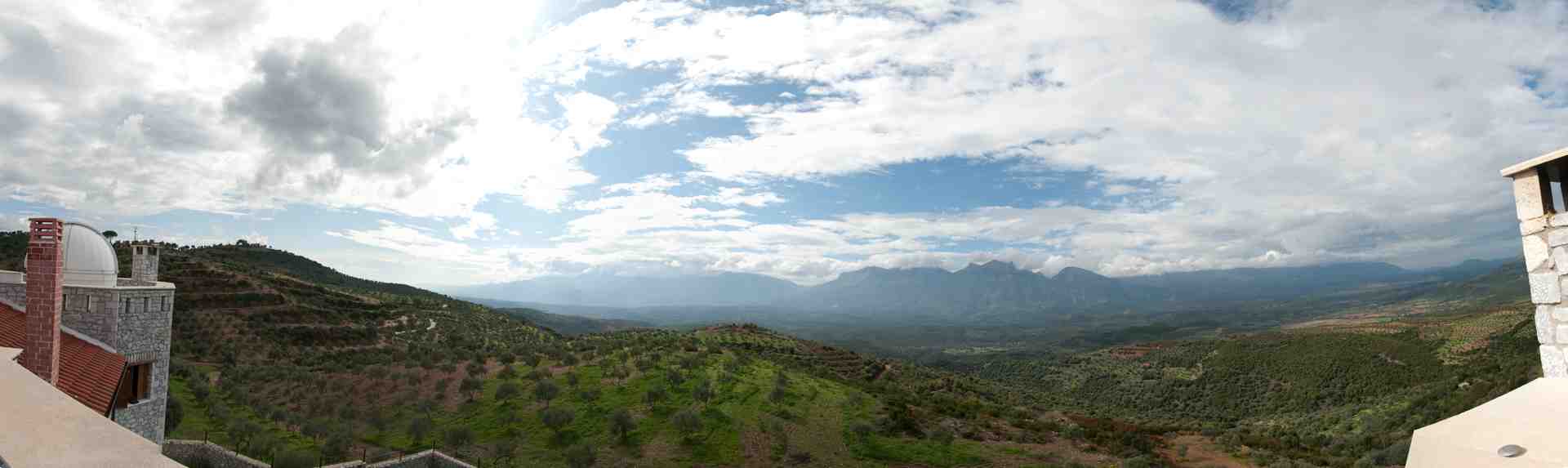
The residency is held at an organic olive oil farm at the foot of Mount Taigetos in Sparta. The residency, a modern and comfortable house, features dormitory-style bedrooms, large and comfortable common rooms (featuring fireplaces and magnificent views of the surrounding mountains and fields), two primary spaces for project development and practice, terraces, rooftop overlooks, and a large and modern kitchen. The surrounding hills, mountains, villages and the not too distant sea, coupled with a vast expanse of sky, stars, and ever-changing mountain vistas, afford the residents amble space and opportunity for creative work. Meals are taken communally, with an emphasis on fresh and local produce and traditional recipes. In this environment artists not only have the chance to live and work together interacting with the Greek landscape, but also to interchange their experiences on everyday life and culture.
“ReVision by Forward Motion Theater” is a fresh innovative, seamless wedding of dance, theatre, music, and video that infuses every moment with intention, focus and psychological depth. It conducts a veritable symphony of human and physical elements and puts a cool frame around existential issues. Internationally acclaimed dancer Gessica Paperini stands out amongst others physically arresting and technically sublime performers. Trained extensively in contemporary dance, and post-modern choreography, Paperini is the epitome of kinaesthetic intelligence and intense physicality. Paperini dances with grace, sophistication and precision. Moreover, she moves a la Mary Wigman style hypnotizing the audience instantly, transcending the realm of the technically virtuous dancer and reclaiming dance as an expression of the soul. Paperini welds aerial lightness and extreme explosiveness, coupled by a mesmerizing presence and a very boutique driven style of performance. Paperini is capable of excavating the life of any character portrayed, capturing the nuances of the soul and clothing her kinaesthetic interpretations into an uber-modern dance style. She is a kinetic sculptor imbuing elegance with rigour, buoyancy with depth, animating her characters through the power of her vibrant and emotionally rich dance lexicon.
Keva Apostolova – Editor in Chief of Theatre Magazine
Performance/Instalação interativa Before The Beep é um espectáculo de dança-performance que também se apresenta como uma instalação interativa que permite a intervenção do público de maneira presencial e remota. Before The Beep faz referência as mudanças da percepção humana na comunicação interperssoal mediada pelas novas tecnologias, e aos espaços que esta mediação gera. O espetáculo confronta o corpo com estas mesmas tecnologias mediadores da comunicação, e explora como elas o re-escrevem e mudam nossa compreensão de lugar e da idéia de presença, redefinindo narrativas e indivíduos.Compreendemos Before The Beep como um universo visual e sonoro, aberto para ser revisitado e ativado pelo corpo em movimento à partir de sua membrana tecnológica.
Microespaços oferecem ao público pontos-de-vista diferentes do mesmo espetáculo e uma multiplicidade de leituras próprias da comunicação contemporânea. Um espaço duplo que se comunica através da projeção de imagens e músicas geradas em tempo real, a partir dos inputs dos performers e do público. O público pode participar de várias maneiras: usando a tecnologia in-situ através de uma rede local, instalada e distribuída no mesmo palco e presencialmente interagindo com sensores de movimento.Before The Beep é uma experiência de de encontro das linguagens de performance interativa do Kònic Thtr com a linguagem da dança contemporânea.
Essa ação conta com as importantes parcerias institucionais do Espaço Xisto Bahia, da FUNCEB, da SECULT, do Instituto Cervantes de Salvador, do Centro Cultural de Espanha de São Paulo e com os apoios da Siedler Companhia de Dança e do Coletivo Construções Compartilhadas.
Como resultado da parceria com a Escola de Dança da FUNCEB, participarão do processo de ensaios 03 alunos do curso Técnico Profissional, vinculados ao Núcleo Porão (núcleo de pesquisa em Dança com interface tecnológica digital) que poderão acessar como o espetáculo é feito tecnicamente, junto ao programador Alain Baumann. Essa experiência será, sobretudo uma ação artístico-pedagógica.
Currículo:
THTR Konic é uma plataforma artística, residente em Barcelona e dedicado à criação contemporânea na confluência da arte, ciência e novas tecnologias. Os trabalhos do Kònic Thtr foram apresentados, entre outros lugares, em: MACBA, o Mercat de les flors, Medialab Madrid (Espanha), Institute of Contemporary Arts, Ikon Gallery, Tramway (Reino Unido), V2 (Holanda), ZKM, Podewill (Alemania), Centre Pompidou/IRCAM (Francia), Centro de la imagen, CCE, (Mexico), Sesc Pompeia i File Fest (Brasil), Tsekh, Proekt Fabrika Moscow (Rusia), 3-Legged Dog Art & Technology Center, Nueva York (EUA). Os últimos projetos do Kònic Thtr tem pesquisado as possibilidades da internet como plataforma de criação distribuída e que possibilita a participaçãon do público. Nos projetos e_pormundos (Kònic Thtr_Catalunya – GTMDA_Brasil /2009-2010) e Dança-Net (Kònic thtr + Digitalent /2010-2011) desenvolveram linguagens e ferramentas para a criação distribuída em diversos espaços (físicos oue na rede web).
'
BEFORE THE BEEP EN FACEBOOK
http://www.facebook.com/home.php#!/pages/Before-The-
Beep/143747972349610:
AÑADE TUS IMAGENES AL ESPECTACULO !
FICHA ARTÍSTICO-TÉCNICA:
Direção artística e cênica: Rosa Sánchez
Direção tecnológica e Composição musical: Alain Baumann
Criadoras-Intérpretes : Elke Siedler e Rita Aquino (dança),Rosa Sánchez, (performance), Alain Baumann (música e audiovisuais en directo)
Coordenação de Produção (local em Salvador): Jaqueline Vasconcellos
Iluminação (local em Salvador): Mariana Terra
Produção (local em Salvador): Rute Mascarenhas
Assistência de Produção (local em Salvador): Edna Mascarenhas
Estudantes-colaboradores (Escola de Dança da FUNCEB): Carlos Teixeira; Camila Bofim; Kécia Rocha
Designer Gráfico: Webtechne (Alvaro Letelier)
Agradecimentos: Assessoria de Relações Internacionais da SECULT, FUNCEB, Espaço Xisto Bahia, Centro Cultural Plataforma, Instituto Cervantes Salvador, CCE-SP, Dystorção Produções, Webtechne, Coletivo Construções Compartilhadas, Siedler Companhia de Dança e a todos que estão contribuindo com esse projeto.
SERVIÇO:
O QUE? Before The Beep
ONDE? Espaço Xisto Bahia
QUANDO? 23/05 (SEGUNDA)
HORA? 20h
QUANTO? R$ 20.00 (INTEIRA), R$ 10.00 (MEIA) E LISTA AMIGA ATÉ 22/05 PELO EMAIL: grupoastresmarias@gmail.com.
CONTATOS: (71) 88915414 (VIVO) / 91878033 (TIM) / 87018736 (oi).
WEBSITES: http://koniclab.info/bienvenido.html?&L=1
http://grupotresmarias.wordpress.com
The body trough the contamination
Video performance installation
Direction, ediction and performance: Katxerê Medina
Sound: Oscar Svanelid
Production: CKAOS
